

Wall Art Tips & Advice, Blog, Hanging & Installation
Complete Guide to Hanging Art from Ceiling: Transform Your Space with Suspended Artwork
Most people use walls and floors for artwork. But hanging art from the ceiling is a smart way to decorate your home. This method saves space and makes rooms look bigger and more interesting.
Ceiling hanging art works great in small homes. It also helps when you want something different from regular wall art. You can hang paintings, sculptures, or decorations from above to create amazing displays.
Why Hang Art from the Ceiling?
Hanging artwork from the ceiling has many benefits. It saves wall space in small rooms. When people see art suspended from the ceiling, they look up. This makes rooms feel taller and bigger.
Suspended art moves slightly with the air. This creates a living, changing display. The movement looks great with lights that make shadows move throughout the day.
Types of Art to Hang from the Ceiling
Understanding the various types of suspended artwork available will help you choose the perfect pieces for your space and aesthetic preferences.

Regular Pictures and Paintings
Hanging pictures from the ceiling is the easiest way to start. You can hang framed art, photos, or prints. This creates a floating gallery in your home.
Use light frames made of aluminum or plastic. Heavy wood or metal frames stress your ceiling too much. You can hang one big piece or many smaller ones at different heights.
Choose lightweight materials for easy installation and safety.
Sculptures and 3D Art
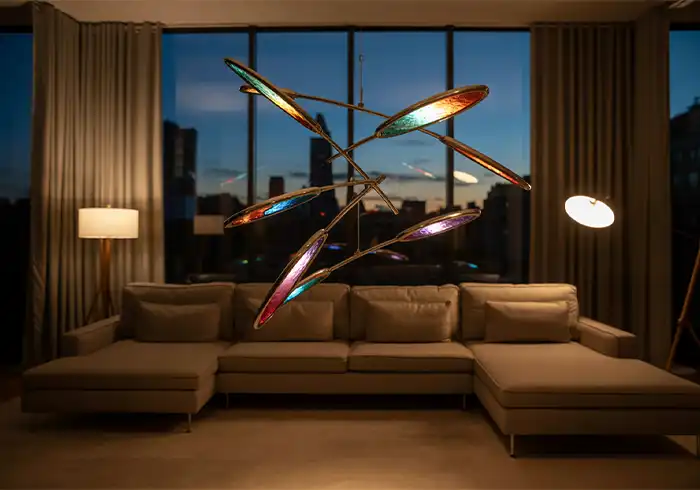
Hanging sculpture from the ceiling works well for three-dimensional pieces. Mobiles, kinetic sculptures, and abstract art look great when hung from the ceiling. People can see these pieces from all sides.
Sculptures and mobiles that move with air create dynamic displays. Big sculptures work as room dividers. Small ones work in groups. Use light materials like thin metal, wood, fabric, or paper. Heavy stone needs professional help.
Modern Art Installations
Art that hangs from the ceiling today often mixes different materials. String art, fabric pieces, plant displays, and mixed-media work well hanging down. Paper lanterns and origami work especially well in bedrooms. Macramé and fabric hangings add texture to any room.
You can hire artists to make custom pieces. Or make your own using materials like macramé, dried flowers, or geometric shapes.
Planning Your Display
A successful ceiling art installation begins with careful planning and assessment of your space. The most critical factor is understanding your ceiling’s structural capacity and limitations.
Check Your Ceiling Strength
Before hanging artwork from the ceiling, learn what weight your ceiling can hold. Different ceilings support different weights.
Drywall ceilings with wood beams can hold 10-15 pounds with good anchors. For heavier pieces, find the ceiling beams. These support much more weight.
Concrete or plaster ceilings require special tools, but they often support heavier art. Ask a contractor if you’re unsure about handling heavy pieces.
Choose Location and Height
Where you put your ceiling hanging art matters. Think about where people walk, where furniture sits, and how light hits the art.
Hang art at least 7-8 feet high where people walk. You can hang it lower over chairs or in corners. Make sure people can see it from the seats and doorways.
Safety Rules
Some places have rules about ceiling art. Check local building codes for heavy pieces or rental properties.
Always use strong hardware. Use anchors rated for more weight than your art needs. Check connections often for wear or loosening. Check weight limits and use proper hooks. Avoid electrical wiring when installing. Secure loose items so nothing swings dangerously.
Installation Methods & Hardware
The method you choose for mounting your ceiling art depends on your ceiling type, artwork weight, and desired aesthetic. Understanding your options will help you select the most appropriate approach for your specific situation.
Wire Systems
Hanging pictures from the ceiling with wire is a popular and flexible method. Thin wire or cable makes art look like it floats in space.
Here are the basic steps:
- Find ceiling studs with a stud finder for secure mounting
- Install hooks or eye bolts that support the weight
- Attach wire or fishing line for a nearly invisible look
- Hang and adjust height at eye level or slightly above
For art under 5 pounds, use picture wire or fishing line. Medium-weight art needs aircraft cable. Heavy pieces need steel cable with proper ratings.
Use crimp sleeves or wire clips for secure connections. Follow the weight limits for your cable type. Don’t hang heavy items over beds or seating areas.
Track Systems
Gallery track systems offer the most flexibility for hanging ceiling decor. A track mounts to the ceiling with adjustable cables.
Tracks work great for renters who want to change displays often. They distribute weight evenly and facilitate easy height adjustments. They cost more but last longer.
Direct Mounting
Some art needs direct mounting to the ceiling. This uses brackets or hooks attached right to the ceiling.
Eye screws, ceiling hooks, and mounting plates are common options. For heavy art, use plates that spread weight across many points. Use the right anchors for your ceiling type.
Room-Specific Ideas & Applications
Different rooms in your home offer unique opportunities and challenges for ceiling-mounted art. Understanding these room-specific considerations will help you create displays that enhance each space’s function and aesthetic.
Living Rooms
Living rooms are ideal for dramatic hanging ceiling decorations that enhance living room displays. These rooms usually have high ceilings and ample space for large art pieces.
Create a focal point above your main seating area. Or use suspended art to separate different areas in open spaces.
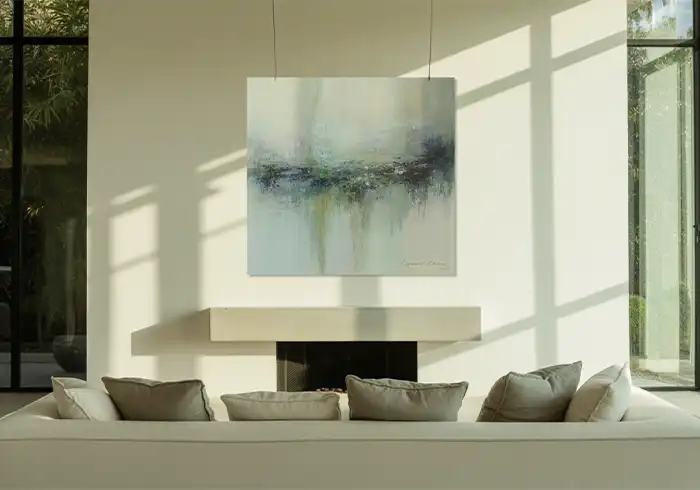
Consider how ceiling art works with lights, windows, and furniture. Geometric wire sculptures create modern looks, while galleries of floating frames offer unique alternatives to wall art.
Bedrooms
Things to hang from the bedroom ceiling should be calming and peaceful. Bedrooms offer opportunities for personal art displays that can be seen from the bed.
Install the art above the foot of the bed, so it’s visible when you enter. Use soft shapes like flowing fabric or delicate mobiles.
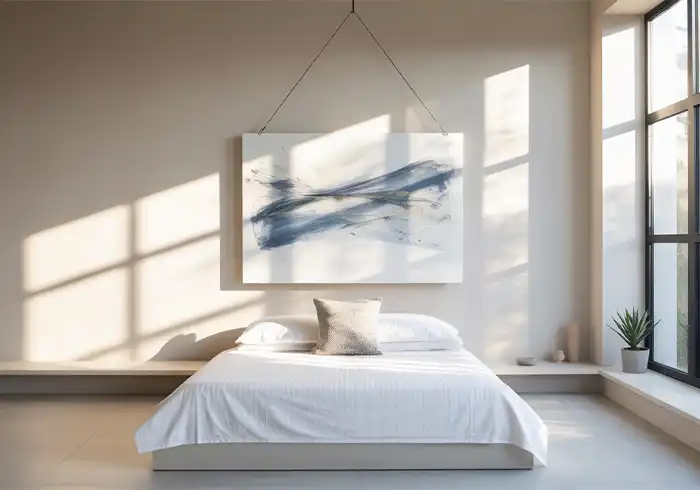
Avoid sharp angles or harsh materials. Dreamcatchers and string lights create cozy feelings. Floating shelves with art combine function and style. Hanging plants add freshness to bedroom spaces.
Classrooms
Hanging art from the ceiling in classroom installations enhances the learning environment and looks good. Suspended art in classrooms makes boring spaces more inspiring.
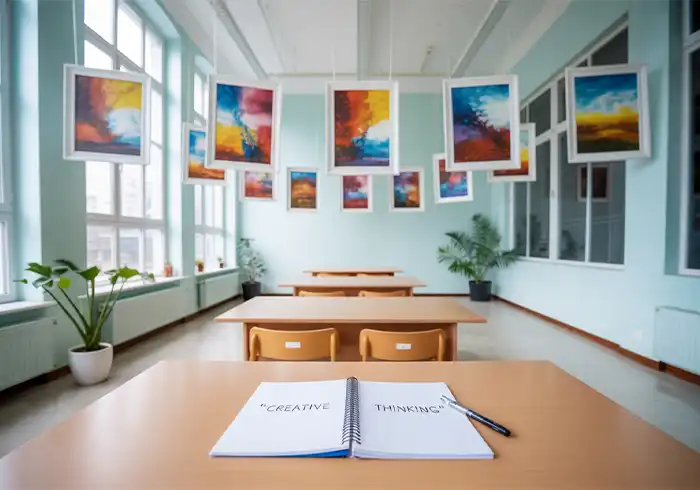
Display student artwork, seasonal decorations, or learning materials like maps or solar systems. These displays save wall space while keeping content visible from all desks.
Safety matters most in classrooms. Mount all pieces well above head height. Use materials that won’t break. Choose lightweight paper, fabric, or plastic that’s easy to remove for cleaning.
Other Rooms
Kitchens need art that handles moisture and grease. Choose materials you can clean easily.
Bathrooms need moisture-resistant materials. But suspended art can make bathrooms feel luxurious.
Home offices benefit from inspiring art that doesn’t compete with computer screens.
Design Tips & Best Practices
Creating successful ceiling art displays requires understanding key design principles and how suspended artwork interacts with your existing decor.
Create Harmony
Hanging decor from the ceiling ideas should match your room’s style. Consider colors, materials, and overall look when choosing suspended art.
Large rooms can handle big installations. Small spaces need delicate pieces. Think about how your art relates to furniture and room size.
Lighting
Good lighting makes or breaks ceiling art displays. Suspended art creates chances for dramatic lighting effects you can’t get with wall art.
Track lighting or recessed spots can highlight suspended art beautifully. Watch how shadows from your art either help or hurt the overall look.
Create Movement
Artwork hanging from the ceiling lets you create a visual flow through your space. Use groups of related pieces to guide eyes through a room.
Think about how people walk through your space. Art along walking paths creates discovery as people move around.
Creative DIY Ceiling Art Projects
DIY ceiling art projects offer affordable ways to experiment with suspended displays while expressing your creativity.
These projects can be particularly rewarding as they result in completely unique pieces tailored to your specific space and aesthetic preferences.
Natural Materials
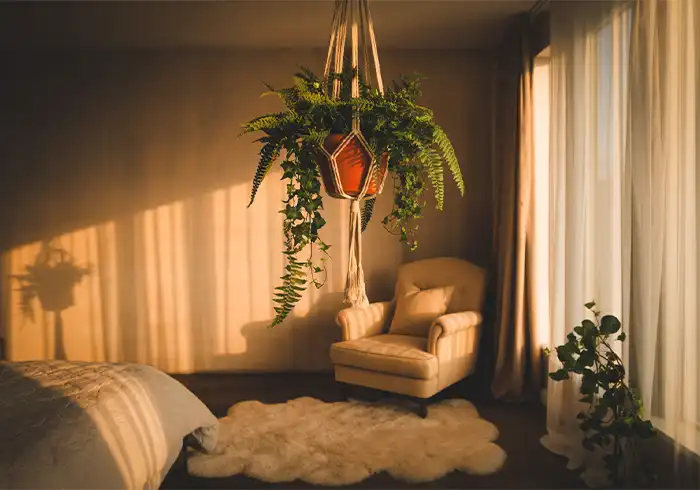
Dried flowers, branches, and plants create beautiful displays that bring nature inside. Create seasonal displays that can be updated throughout the year.
Simple Driftwood Mobile:
- Materials: Driftwood pieces, fishing line, ceiling hook
- Steps: Tie wood pieces of different lengths and suspend from a hook
Macramé and fiber arts work wonderfully as ceiling art. These materials are light and come in many colors and textures.
Geometric Projects
Paper, cardboard, and light metals make geometric displays that add modern style. Create systems that can be rearranged or use large displays to divide rooms.
Hanging Photo Display:
- Materials: Mini clothespins, string, printed photos
- Steps: Clip photos onto strings in a cascading style
Origami-inspired pieces offer endless possibilities. Large paper sculptures look impressive while staying budget-friendly and light.
Recycled Art
Old picture frames work as suspended displays. Use them empty as design elements or fill them with materials that catch light.
Recycling materials into art helps the environment. This approach creates unique pieces while reducing waste. Use recycled materials like old frames or fabric scraps to save money on your projects.
Maintenance and Care
Proper maintenance ensures your ceiling art remains beautiful and safely mounted over time. Regular inspection and care prevent problems before they become serious safety hazards or aesthetic issues.
Regular Checks
Check your suspended art monthly for wear, loosening, or damage. Look at mounting points, cables, and hardware. Watch for frayed wires, rust, or loose screws. Check regularly and tighten hooks over time.
Take photos and notes about how you mounted pieces. This helps with future maintenance or repairs.
Cleaning
Dust shows more on suspended art than on wall art. Develop regular cleaning routines for your specific materials.
Use long dusters for routine cleaning. Consider professional cleaning for valuable pieces.
Seasonal Changes
Weather changes can affect ceiling mounts and art materials. Be ready to make adjustments as seasons change.
Rotate pieces seasonally to prevent uneven fading. This keeps your space feeling fresh year-round.
Troubleshooting Common Issues
Even well-planned ceiling art installations can encounter problems. Understanding common issues and their solutions helps ensure your suspended artwork remains beautiful and secure.

Stopping Unwanted Movement
Some movement is nice, but too much swaying can be distracting. Air from heating systems, windows, or foot traffic causes unwanted movement.
Use multiple hanging points for larger pieces. Add small weights to the bottom of light installations. Position pieces away from air currents.
Weight Issues
Pieces that seem secure at first may develop problems as materials settle. Regular checking helps find weight problems before they become serious.
Add more support points for pieces with stability issues. Sometimes, simple adjustments to cable lengths fix weight problems.
Balance Problems
What looks perfect during installation may seem wrong after living with it. Don’t hesitate to adjust height, position, or groupings.
View your installation from all angles at different times of day. Natural and artificial light changes how suspended art appears.
Conclusion
Hanging art from the ceiling transforms spaces in unique ways. Whether you choose simple hanging pictures from the ceiling with wire or complex sculptures, suspended art creates memorable displays.
You can hang heavy frames from the ceiling using heavy-duty anchors and proper weight limits. To prevent ceiling damage, use adhesive hooks for light items or make small nail holes. The best height for ceiling art is eye level or slightly above (7-9 feet) for optimal viewing.
Start with light pieces to gain experience. Then try bigger installations as you get more comfortable. Remember that ceiling art surprises people because it’s unexpected.
Your ceiling is unused space waiting for creative ideas. With proper planning and safe installation, you can turn that space into a stunning showcase that elevates your home’s style.
Further Reading
- How High to Hang Pictures & Paintings? The Correct Height Formula
- How Far Apart Should You Hang Pictures? Wall Art Spacing Guide for Any Layout
- How to Hang Art and Pictures without Nails/Drilling
- How to Hang Metal Wall Art With or Without Nails & Hooks
- How to Hang Acrylic Prints Wall Art
- Wall Decor Ideas for Living Room: Modern, Elegant & Cheap Ways to Style Any Space
- 50+ Small Wall Decoration Ideas: Maximizing Tiny & Long Narrow Spaces
- Large Wall Decor Ideas: How to Decorate Big Empty Walls in Every Room (2025 Guide)
Want more wall art ideas, room styling tips and first access to new Bruzzen collections? Join the list — free.
Subscribe Free →