

Blog, Wall Decorating Ideas
Different Abstract Art Styles & Painting Techniques with Examples
Many people struggle to understand abstract art and its many forms. Abstract art emerged in the early 1900s, as artists shifted away from depicting real objects. This guide will walk you through the main types of abstract art, from bold splashes of color to neat geometric shapes.
Ready to explore a world where rules don’t apply?
Abstract Expressionism
Abstract Expressionism broke free from old art rules in the 1940s and 1950s. This bold movement put raw feelings on canvas through wild brushstrokes and splashed paint.
Action Painting

Action painting burst onto the art scene in the mid-20th century as a bold style within abstract expressionism. Artists like Jackson Pollock made this approach famous through their large-scale canvases that captured raw emotion and spontaneous energy.
The artist’s physical movements become part of the artwork itself, with paint often dripped, splashed, or smeared across the surface. This technique values the process of creation as much as the final product, showing the artist’s feelings through dynamic brushstrokes.
The hallmark of action painting lies in its gestural brushwork that reveals movement and emotional intensity. Unlike geometric abstraction, with its precise shapes, or color field painting, with its flat areas of color, action painting celebrates chaos and freedom.
Artists work quickly to capture pure expression without planning every detail. The canvas serves as a space for physical action where artists dance, move, and interact with their materials.
This style invites viewers to form their own interpretations based on the visual energy they see.
Color Field Painting
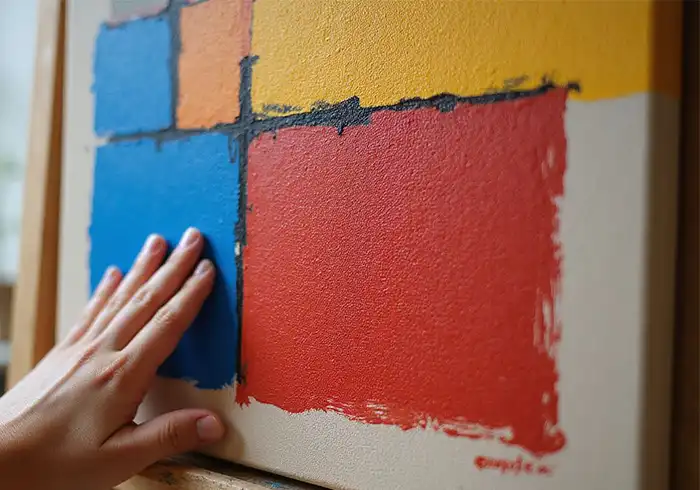
Color Field Painting stands out as a significant style within Abstract Expressionism. Artists who practice this technique focus on large areas of solid color, creating a flat picture surface.
The colors often blend with soft edges, creating subtle gradations that flow across the canvas. Unlike action painting, color field works aim to develop a sense of calm and meditation through their use of color.
Mark Rothko became one of the most famous color field painters in the 1950s. His large canvases featured rectangular blocks of color with fuzzy borders that seemed to float against the background.
These paintings invite viewers to experience strong emotional responses through the power of color alone. Other notable artists include Barnett Newman and Clyfford Still, who used color fields to express spiritual and sublime ideas without recognizable objects.
I’m not interested in the relationship of color, form, or anything else. I’m interested only in expressing basic human emotions. – Mark Rothko
Cubism
Cubism broke art rules by depicting objects from multiple angles simultaneously. Pablo Picasso and Georges Braque initiated this movement in the early 1900s, employing flat shapes to create innovative perspectives.
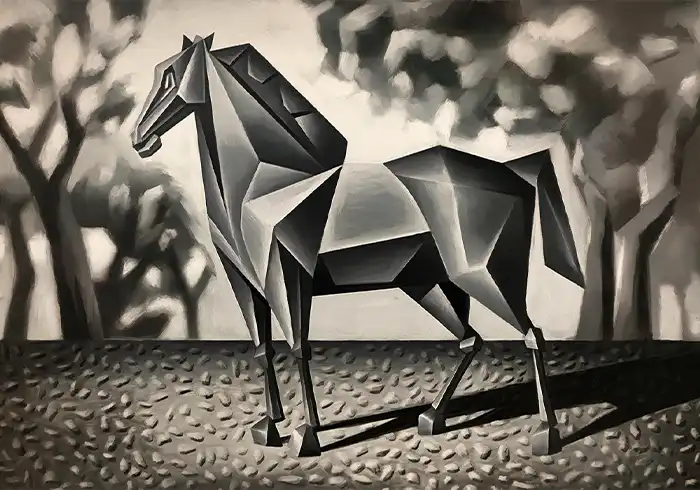
Analytical Cubism
Analytical Cubism emerged between 1908 and 1912 as the first phase of the Cubist movement. Pablo Picasso and Georges Braque broke down objects into geometric shapes and presented multiple viewpoints simultaneously.
They used muted colors, such as browns and grays, to focus on form rather than color. Artists painted objects from different angles on a flat canvas, creating a puzzle-like effect that prompts viewers to consider how they perceive things.
This style changed how artists showed depth and space in paintings. Instead of a traditional perspective, Analytical Cubists created fragmented views that look almost transparent. The paintings often feature everyday objects, such as bottles, musical instruments, and tables.
Famous works include Picasso’s “Portrait of Ambroise Vollard” and Braque’s “Violin and Palette,” which demonstrate how artists transformed familiar subjects into complex geometric arrangements.
Synthetic Cubism
Synthetic Cubism emerged around 1912 as the second phase of Cubism, following Analytical Cubism. Pablo Picasso and Georges Braque developed this style, characterized by brighter colors and simpler shapes, compared to their previous works.
Artists began incorporating real materials, such as newspaper clippings, wallpaper, and fabric, into their paintings, thereby creating the first collages in modern art. This technique, known as “papier collé” (pasted paper), introduced texture and real-world elements into abstract compositions, thereby enhancing their visual appeal.
Synthetic Cubists often included recognizable objects but presented them in flat, overlapping planes.
The artwork in this period features bold patterns, strong outlines, and a playful approach to space. Artists arranged shapes to create new forms rather than breaking down existing ones.
Picasso’s “Still Life with Chair Caning” (1912) stands as a famous example, combining oil paint with a piece of oilcloth printed with chair caning pattern. Juan Gris also became a major figure in Synthetic Cubism, using precise arrangements and vivid colors in his work.
The flat, decorative quality of these pieces significantly influenced later art movements, such as Constructivism and De Stijl. Geometric abstraction took these ideas even further by focusing purely on shapes and patterns.
Geometric Abstraction
Geometric Abstraction emerged in the early 20th century as artists moved away from depicting reality. Artists such as Kazimir Malevich and Piet Mondrian created precise compositions using straight lines, squares, circles, and other geometric forms.
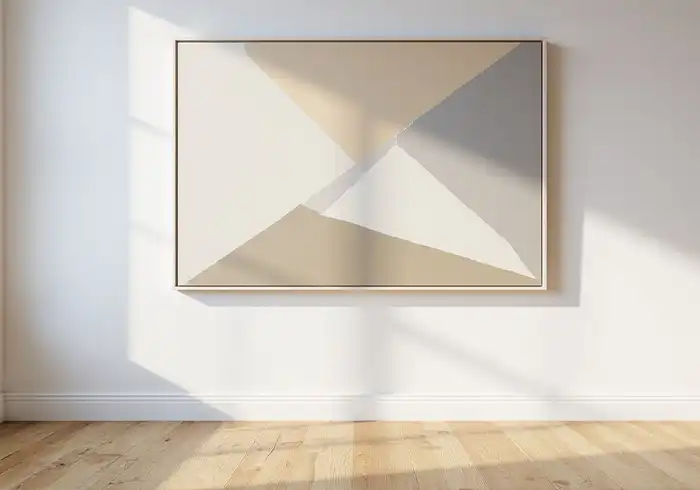
Use of Shapes and Patterns
Shapes form the backbone of geometric abstraction. Artists in this style use circles, squares, triangles, and lines to construct their works, rather than representing real-world objects. Piet Mondrian, a key figure in this movement, created famous pieces with primary colors and straight lines.
These artists arrange basic shapes to create complex patterns that resonate with viewers on a visual level.
Patterns in geometric abstraction often create optical illusions that trick the eye. Op Art masters, such as Bridget Riley, used repeating shapes to make static images appear to move or vibrate.
The careful placement of shapes can guide viewers’ eyes across the canvas in a planned path. This technique lends abstract art its unique visual power, eliminating the need to depict recognizable objects from our everyday world.
Minimalism
Minimalism strips art down to its basic parts, using simple forms, clean lines, and few colors to create strong works that speak through what they leave out rather than what they include.
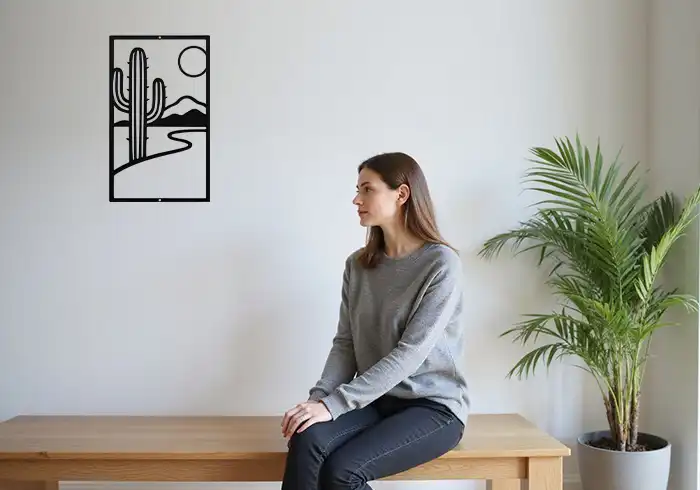
Emphasis on Simplicity
Simplicity stands at the heart of minimalist abstract art. Artists in this style strip away excess details to focus on basic elements, such as clean lines and uncluttered spaces. They use raw materials for their physical qualities rather than their symbolic meaning.
Donald Judd and Agnes Martin created works with geometric forms that highlight essential artistic components without emotional clutter.
Minimalist art creates a stark contrast to more complex abstract styles. The movement gained popularity in the 1960s as artists rejected the emotional intensity of abstract expressionism.
Works often feature primary colors, basic shapes, and space that invites viewers to experience art directly. This pared-down approach forces us to notice subtle details we might otherwise miss in more complicated pieces.
Surrealism
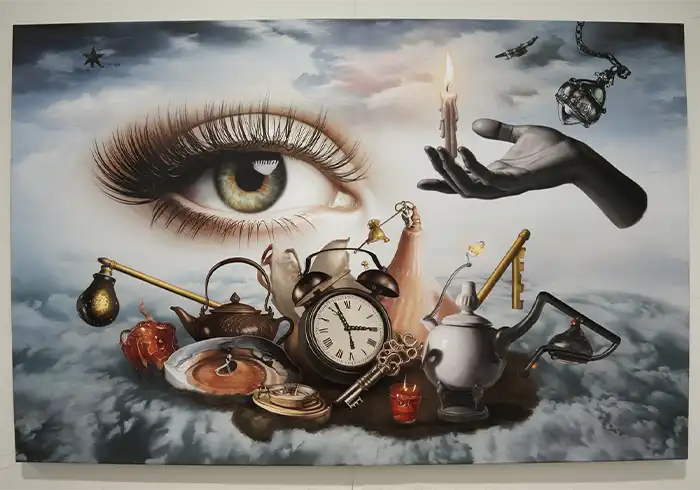
Surrealism extends abstract art into the domain of dreams and the subconscious mind. Salvador Dali and René Magritte produced strange, dream-like scenes that defy the rules of reality.
Dreamlike Imagery
Surrealist abstract art creates strange worlds that mix dreams with reality. Artists like Salvador Dali painted melting clocks and floating objects that break the rules of normal life.
These dreamlike images often reveal hidden thoughts and feelings from the deepest parts of the mind. The artists used bright colors, unusual shapes, and unexpected combinations to make viewers feel as though they had stepped into someone else’s dream.

Many surrealist works feature objects that don’t belong together, like Joan Miró’s floating shapes and symbols against empty backgrounds. These artists wanted to free art from logic and reason.
They painted what couldn’t exist in the real world but felt true in dreams. This style lets viewers find their own meanings in the strange scenes and symbols that float across the canvas.
Lyrical Abstraction
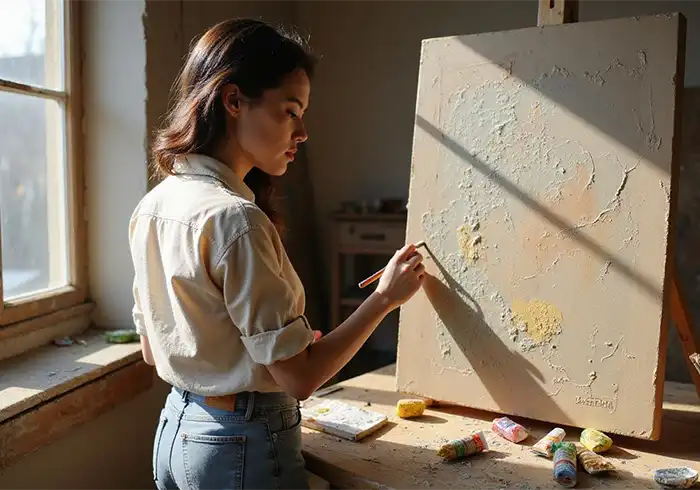
Lyrical Abstraction brings emotion to the canvas through flowing forms and vibrant colors. Artists like Joan Mitchell created works that evoke a sense of visual music, with each stroke telling a personal story.
Fluid and Expressive Lines
Fluid and expressive lines form the heart of lyrical abstraction in modern art. Artists create flowing marks that dance across the canvas, showing feelings rather than objects. These dynamic strokes convey motion and emotion without trying to copy reality.
Joan Mitchell and Willem de Kooning mastered this technique, employing sweeping brushwork to convey their inner thoughts.
Abstract expressionists often employ this approach to create works that directly address viewers’ emotions. The lines might curve gently or slash boldly across the surface, each movement capturing the artist’s energy.
Unlike geometric abstraction with its rigid forms, these fluid elements feel alive and spontaneous. The freedom of movement in these lines connects deeply to the emotional power that makes abstract art so moving.
Op Art
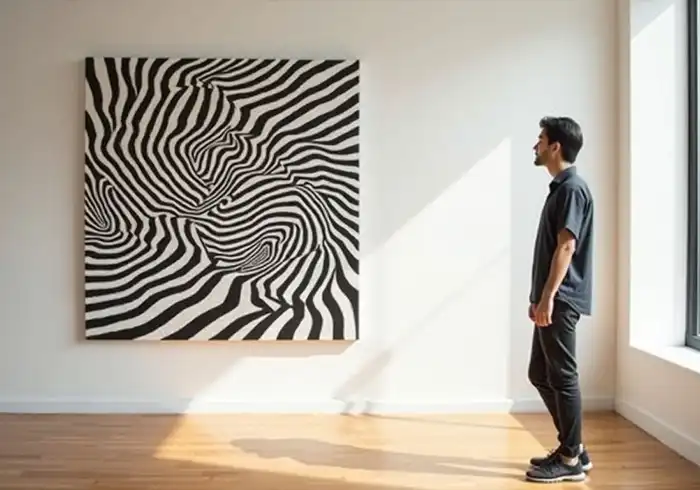
Op Art tricks your eyes with bold patterns and moving effects that seem to pulse, shift, and vibrate right off the canvas. Artists create dazzling optical illusions through precise geometric shapes and contrasting colors, making static images appear to move.
Read more to discover how these visual puzzles challenge your perception and blur the line between art and science.
Optical Illusions and Visual Effects
Op Art creates amazing visual tricks that make flat surfaces seem to move or vibrate. Artists like Bridget Riley use black and white patterns that fool our eyes into seeing motion where none exists.
These optical illusions play with our brain’s way of processing what we see. The art often features repeating geometric shapes and stark contrast that creates a sense of movement across the canvas.
Visual effects in Op Art go beyond simple tricks. The style emerged in the 1960s and relies on precise patterns and color relationships to create its distinctive impact. Many Op artists draw inspiration from color field painting techniques, but they focus on creating visual tension rather than evoking emotional responses.
Viewers often report feeling dizzy or disoriented when looking at these works, which is exactly what artists like Victor Vasarely intended with their carefully crafted visual puzzles.
Informalism
Informalism emerged in Europe after World War II as artists rebelled against strict forms. These artists created raw, emotional works through quick, unplanned gestures that revealed their inner feelings rather than relying on planned compositions.
Spontaneous and Intuitive Creations
Informalism stands out as one of the most free-spirited types of abstract art. Artists who practice this style create works without planning, letting their feelings guide each brushstroke.
Jackson Pollock became famous for this approach, dripping paint across canvases in what seemed like random patterns but actually expressed deep emotions. Many informalist painters work quickly to capture raw energy and avoid overthinking their process.
The movement gained strength in Europe after World War II when artists needed new ways to express trauma and hope. Unlike geometric abstraction, with its strict shapes, informalism embraces chaos and accident as integral to the creative process.
Artists like Willem de Kooning and Joan Mitchell created paintings that appear messy at first glance but contain powerful emotional truths. Their spontaneous creations often feature thick paint, unusual textures, and bold color combinations that break traditional art rules.
Neo-plasticism
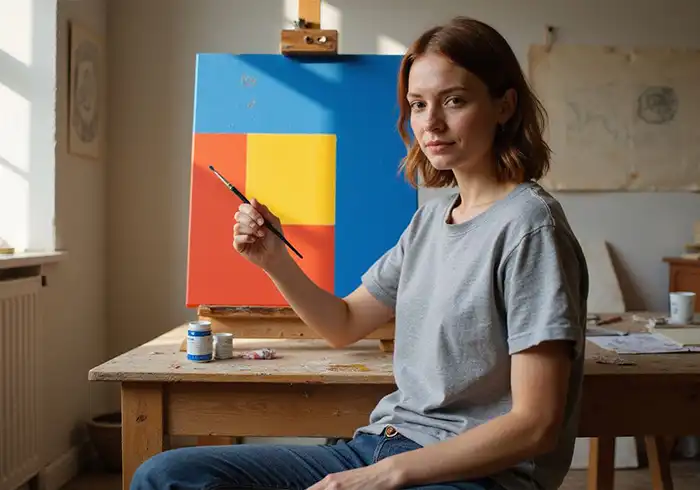
Neo-plasticism represents Dutch painter Piet Mondrian’s approach to abstract art, characterized by strict geometric elements and primary colors. This style emerged from the De Stijl movement and features precise lines forming grids filled with blocks of pure red, blue, yellow, white, and black.
Focus on Primary Colors and Grids
Primary colors form the backbone of Neo-plasticism, with red, blue, and yellow standing at the center of this art style. Piet Mondrian used these pure hues against white backgrounds, separated by black grid lines, to create harmony in his abstract works.
The grid system brings order to these compositions, using straight horizontal and vertical lines that never curve or bend. Artists like Mondrian believed these simple elements could express universal truths through geometric abstraction.
The grid-based approach creates a sense of balance that many find calming and orderly. Each color block is carefully placed within its own space to achieve visual harmony. This style rejects realistic depictions in favor of pure color exploration, enabling viewers to connect with the art on a more fundamental level.
The clean lines and basic color choices make Neo-plasticism one of the most recognizable types of non-representational art in modern history.
Composition Techniques in Abstract Art Forms
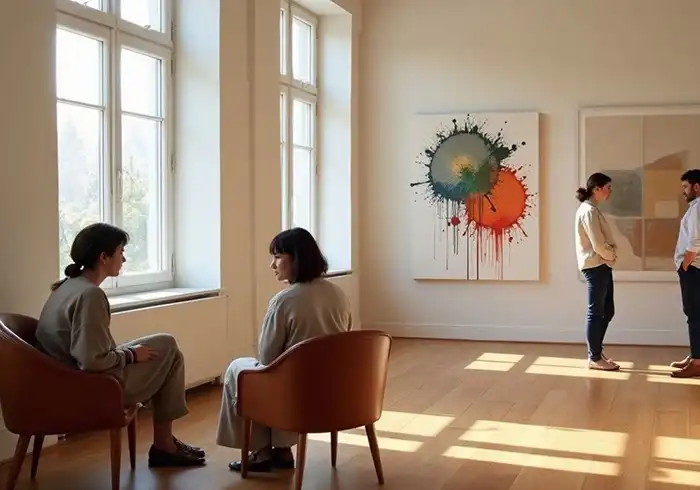
Abstract artists employ diverse techniques, ranging from wild brushstrokes to careful drips and inventive collages, to create an emotional impact. Explore these methods that have revolutionized the art world.
Gesture and Brushwork
Gesture and brushwork form the heart of abstract expressionism. Artists such as Jackson Pollock and Willem de Kooning employed bold, sweeping arm movements to create dynamic marks on canvas.
These painters let their emotions guide their hands, resulting in energetic strokes that capture feelings rather than objects. The brushwork often shows thick paint applied with wide brushes, palette knives, or even hands.
Artists in the action painting movement made their physical process visible in the final artwork. Each stroke tells the story of its creation, from light touches to heavy pressure.
Color field painters, such as Mark Rothko, used softer brushwork to create smooth, blended color areas that merge at the edges. This technique differs from the sharp, defined lines found in geometric abstraction or op art pieces by artists such as Bridget Riley.
Drip-and-Pour Methods
Drip-and-pour methods changed art forever when Jackson Pollock made them famous in the 1940s. Instead of using brushes, artists pour or drip paint directly onto canvas laid flat on the floor.
Pollock walked around his canvases, flinging and dripping paint in rhythmic motions that created webs of color and texture. This technique allows paint to flow naturally, creating random patterns that capture the artist’s movements and energy.
Other abstract expressionists, like Willem de Kooning, also used pouring techniques, but with different results. The method creates depth through layers of paint that build up over time.
Artists often use house paint, industrial enamels, or thinned oils that flow easily across surfaces. The finished works show gravity’s effect on liquid paint, with splashes, pools, and trails that record the artist’s physical actions.
This approach broke traditional rules about how paintings should be created and presented.
Collage and Mixed Media
Moving beyond drip methods, many abstract artists embrace collage and mixed media to create depth. Collage involves pasting different materials, such as paper, fabric, or found objects, onto a surface.
Pablo Picasso and Georges Braque pioneered this technique in their cubist works, combining newspaper clippings with paint to break traditional art boundaries. Mixed media takes this further by mixing various art supplies such as paint, ink, charcoal, and even non-art materials.
Artists like Robert Rauschenberg pushed the limits of mixed media with his “combines,” which merged painting with sculpture. These techniques give abstract art rich textures and layers that pure paint cannot achieve.
The physical nature of collage materials adds a tactile quality that connects viewers to the artwork in a direct way. Many contemporary abstract artists continue to explore these methods, creating works that blur the line between painting and sculpture.
Abstract Examples & Famous Artists
Abstract art has given us masterpieces that changed how we see art forever. These famous works show the bold vision of artists who broke away from showing real objects and scenes.
Wassily Kandinsky’s “Circles In A Circle”
Wassily Kandinsky painted “Circles in a Circle” in 1923, creating one of his most famous geometric abstract works. This masterpiece features a large black circle containing many smaller colored circles that overlap and interact with straight lines.
The painting illustrates Kandinsky’s conviction that circles symbolize cosmic perfection and spiritual harmony. He used bold primary colors against a light background to create visual rhythm and movement.
The artwork marks a pivotal phase in Kandinsky’s career, as he taught at the Bauhaus school and developed his theories about shapes and colors. “Circles in a Circle” demonstrates his shift from earlier expressionist styles toward more structured geometric abstraction.
Art historians often point to this painting as a prime example of Kandinsky’s mature style, where he successfully balances mathematical precision with artistic expression. The piece now hangs in the Philadelphia Museum of Art, where visitors can experience its vibrant energy firsthand.
Jackson Pollock’s Drip Paintings
Jackson Pollock created some of the most famous works in abstract expressionism with his drip painting method. He spread large canvases on the floor and moved around them, pouring or dripping paint from cans or sticks.
This action painting style broke rules about how artists should work. Pollock used house paints, sticks, and even hardened brushes to make swirls, splatters, and lines that showed his emotions and energy.
His paintings like “Number 1, 1950 (Lavender Mist)” capture raw feeling through layers of paint. Critics called Pollock “Jack the Dripper” due to his distinctive style. The drip paintings reveal no apparent objects, instead showcasing pure expression through color and movement.
These works transformed modern art by demonstrating that the act of painting itself could be as important as the finished picture. Pollock’s spontaneous method created complex patterns that pull viewers into a world of pure visual energy.

Piet Mondrian’s “Composition with Red, Blue, and Yellow”
Moving from Pollock’s energetic splatters, we find a different approach to abstract art in Piet Mondrian’s work. “Composition with Red, Blue, and Yellow” stands as a perfect example of geometric abstraction.
This famous painting uses only primary colors with black lines and white spaces. Mondrian created a grid-like structure that shows his focus on balance and simple forms.
The artwork represents neoplasticism, an art style Mondrian helped create. He believed art should express universal harmony through basic visual elements. The painting uses straight lines and pure colors to achieve a sense of order.
Many designers and architects later drew inspiration from this clean, structured approach to abstraction. Mondrian’s work demonstrates that abstract art can be both simple and powerful simultaneously.
Mark Rothko’s Color Field Paintings
Unlike Mondrian’s strict geometric forms, Mark Rothko created emotional landscapes through his color field paintings. Rothko applied large areas of color with soft edges that seem to float on the canvas.
His massive works draw viewers into deeply emotional spaces through simple, rectangular forms that pulse with feeling. The Russian-American artist became a key figure in Abstract Expressionism during the 1950s, although he rejected this label.
Rothko’s paintings feature subtle color gradations that create a sense of depth and movement. He often used rich reds, deep blues, and golden yellows that glow with inner light. These works invite viewers to stand close and become surrounded by color.
Many people report strong emotional reactions to Rothko’s paintings, from joy to sadness. His minimalist approach strips away everything except pure color and form, yet his work remains deeply moving rather than cold or distant.
What is Abstract Art? Definition
Abstract art is a style of art that uses shapes, colors, lines, and textures to express ideas or emotions rather than depict real-life objects or scenes accurately.
What are the 5 Main Characteristics of Abstract Art?
Non-representational imagery
Emphasis on color, form, and line
Simplified or distorted shapes
Focus on emotional expression
Freedom from realistic constraints
What are the six elements of abstract art?
The six elements are:
Line: Creates movement and defines shapes
Color: Conveys mood and emotion
Texture: Adds visual and tactile quality
Shape: Forms the basic structure
Form: Creates three-dimensional appearance
Space: The use of positive and negative areas to create balance, focus, or tension.
What is Abstraction Definition in Art?
Abstraction is the process of removing or simplifying realistic details from subjects. Artists extract essential elements while eliminating literal representation to focus on pure visual elements like color, shape, and composition.
To bring these styles home, browse our abstract wall art collection in canvas, metal and acrylic.
Conclusion
Abstract art opens doors to endless creative worlds beyond what we see in real life. Each style brings its own magic, from the wild splashes of Pollock to the neat grids of Mondrian.
These art forms allow artists to share their deepest feelings and ideas without depicting real objects. You might connect with the bold colors of Abstract Expressionism or prefer the clean lines in Geometric Abstraction.
The beauty of abstract art lies in its ability to speak to each person in a unique way. Next time you visit a museum, take a moment to contemplate abstract pieces and see what feelings they evoke in you.
Want more wall art ideas, room styling tips and first access to new Bruzzen collections? Join the list — free.
Subscribe Free →