

Acrylic prints deliver vivid detail, rich color, and decades of durability.
This guide shows how they work, what makes them unique, and how to pick the best option for your home, office, or gallery.
From basics to advanced tips, you’ll learn exactly what to look for to create stunning, lasting wall art.
What Are Acrylic Prints?
Acrylic prints are a modern way to display photos and art. Your image sits behind a clear piece of acrylic glass (also called plexiglass). This creates a sleek, modern look without frames.
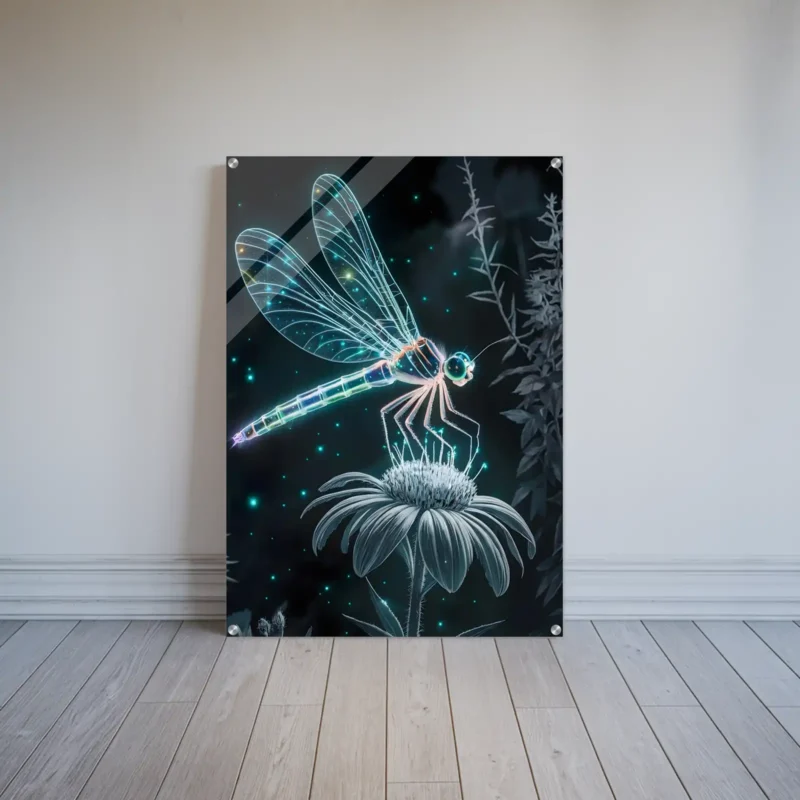
The acrylic makes your image look bright and sharp. It also creates a cool 3D effect that makes pictures seem to float inside the glass.

Two Main Types of Acrylic Prints
There are two ways to make acrylic prints. Each method yields different results in terms of quality, cost, and longevity.
Direct Print Method
In this method, printers spray ink directly onto the acrylic surface. Special UV printers cure the ink instantly. Workers often add white ink on top to make colors pop.
Benefits:
- Usually costs less
- Creates sharp lines and bright colors
- Ink becomes part of the acrylic
- Good for signs and displays
Best for: Signs, commercial displays, and budget-friendly art
Face Mount Method
This method is more complex but creates better quality. First, print your image on high-quality photo paper. Then glue this print to the back of the acrylic sheet using special clear adhesive. Finally, they polish the edges for a glossy finish.
Benefits:
- Superior photo quality
- Better color accuracy
- Lasts longer
- Gallery-quality results
Best for: Fine art, gallery displays, and premium pieces
Key Features That Make Acrylic Prints Special
Crystal Clear View: High-quality acrylic has no flaws or cloudiness. This makes your images look super sharp and clear.
Bright, Rich Colors: The glossy surface makes colors look more vibrant. High-contrast and colorful images really stand out.
3D Depth Effect: Light passes through the acrylic in a special way. This creates an amazing depth effect that makes images look three-dimensional.
Modern, Frameless Look: Acrylic prints don’t need frames. They have clean lines that work well with modern home designs.
How Acrylic is Made
Raw Materials
Acrylic starts as a chemical called methyl methacrylate (MMA). Workers add acetone and sodium cyanide to help the process.
Making the Sheets
There are two ways to make acrylic sheets:
Cast Method:
- Pour liquid acrylic into molds
- Takes more time but makes better quality
- Creates thicker sheets with perfect clarity
- Costs more but looks better
Extrusion Method:
- Push acrylic through a machine
- Faster and cheaper
- Good for thin sheets and basic uses
- Lower quality than cast acrylic
Finishing Steps
- Heat the acrylic to remove chemicals
- Cool it carefully to prevent flaws
- Test for quality
- Polish and cut to size
Making an Acrylic Print
Design and Cutting
It starts with a detailed plan. Cut acrylic sheets using laser cutters for perfect edges.
Drilling and Shaping
They drill holes where needed for mounting. CNC machines create complex shapes and textures.
Polishing
Different polishing methods create smooth, clear surfaces:
- Cloth wheel polishing for flat surfaces
- Diamond polishing for edges (creates amazing shine)
- Flame polishing for curved shapes
Assembly
For complex pieces, parts are glued together or bent using heat.
Printing Methods
High-Quality Photo Printing
- Print on special photo paper
- Use clear adhesive to attach to acrylic
- Creates archival-quality results
UV Digital Printing
- Print directly on the acrylic surface
- Cure the ink with UV light instantly
- Add a white ink layer for opacity
Surface Decoration Options
- Silk-screen printing for logos
- UV printing for full-color designs
- Vinyl decals for cost-effective branding
- Etching for artistic effects
Why Choose Acrylic Prints? Pros and Cons
Benefits
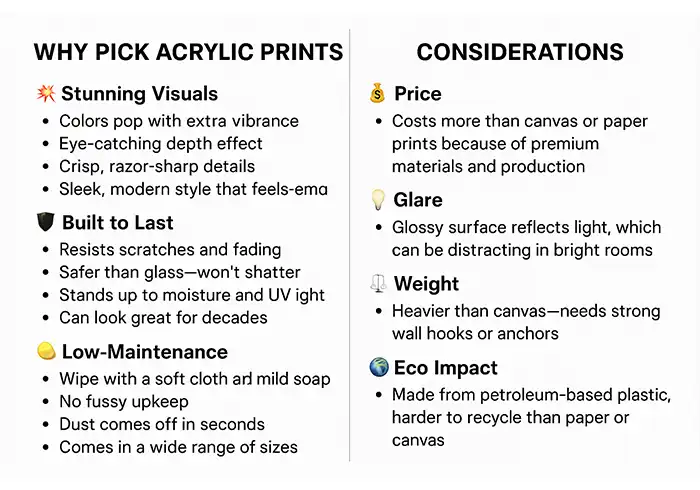
Amazing Visual Impact
- Colors look more vibrant
- Creates an impressive depth effect
- Sharp, clear details
- Modern, professional appearance
Very Durable
- Resists scratches and fading
- Won’t break like glass
- Handles moisture and UV light well
- Lasts for many years
Easy Care
- Clean with a soft cloth and mild soap
- No special maintenance needed
- Dust wipes off easily
Versatile Display
- Works in many room styles
- Good for homes and offices
- Fits modern and professional spaces
- Available in many sizes
Things to Consider: Downsides
Higher Cost: Acrylic prints cost more than other options due to materials and the complex manufacturing process.
Can Create Glare: The shiny surface reflects light. This can cause glare in bright rooms.
Heavier Weight: Acrylic prints weigh more than canvas prints. You need strong mounting hardware.
Environmental Impact: Made from petroleum-based plastic. It is harder to recycle than paper or canvas options.
Acrylic Prints vs. Other Wall Art Media

Acrylic prints stand out for their sharp detail, vibrant colors, and modern appeal. But the right choice depends on what you’re printing, where you’re displaying it, and the mood you want to set. Here’s how acrylic compares with canvas, metal, and paper-based prints at a glance.
| Feature | Acrylic Prints | Canvas Prints | Metal Prints | Paper/Giclée Prints |
| Look | Glossy, modern, 3D effect | Textured, warm, painterly | Industrial, bold | Varies by finish |
| Colors | Very sharp and bright | Softer, muted tones | Bold with shine | High detail, less depth |
| Durability | UV, scratch, water resistant | Good with care | UV, scratch, water resistant | Needs frame protection |
| Glare | Can reflect light | No glare | Low to moderate glare | Depends on finish |
| Weight | Moderate to heavy | Light | Lightest | Light |
| Cost | Higher | Lower | Slightly higher than acrylic | Budget-friendly |
| Environment | Hard to recycle | Often biodegradable | High energy to make | Paper-based, recyclable |
| Best For | Sharp photos, digital art | Soft images, cozy spaces | Nature photos, modern decor | Affordable art, framed prints |
Details
- Acrylic vs. Canvas Prints: Which Offers the Best Value and Aesthetics?
- Acrylic vs Metal Prints: A Comprehensive Comparison Guide
- Acrylic vs. Traditional Paper Prints ( Giclee &Standout): A Full Comparison
Choosing Your Acrylic Print Guide
Achieving gallery-quality acrylic prints requires the right materials, precise production, and strict quality checks. You should choose carefully to get the best results for your investment.
Thickness Options
The thickness of the acrylic sheet significantly influences both the visual depth and the structural rigidity of the print. Acrylic prints are commonly available in several thicknesses:
1/8″ — Light & Budget-Friendly
- Offers a vibrant, polished look at a lower price
- Works especially well with float frames for a modern presentation
- Light and easy to hang—ideal for small to medium prints
1/4″ — Standard Gallery Thickness
- Most popular choice for both homes and galleries
- Delivers a strong 3D edge effect that enhances depth
- Rigid enough for fine art displays without extra support
1/2″ — Enhanced Depth
- Adds noticeable dimension, giving prints a premium feel
- Suitable for larger prints (up to 40×30 inches) without losing structure
- Great for making a statement piece without going too heavy
1″ — Photo Blocks
- Thickest option for acrylic prints
- Stands on its own without framing—perfect for desktops or shelves
- Delivers superior vibrancy, stability, and the most impressive presentation
| Thickness | Look | Structure | Best Use |
| 1/8″ | Good vibrancy | Needs float frame | General printing |
| 1/4″ | Strong 3D edge | Good rigidity | Gallery / Fine art |
| 1/2″ | Enhanced depth | Good rigidity | Larger prints |
| 1″ | Superior vibrancy | Excellent rigidity | Standalone display |
Backing Materials
The backing material plays a crucial role in protecting the print, providing a surface for attaching hanging hardware, and stabilizing the acrylic sheet, unless the print is direct-printed and uses stand-off bolts.
Sintra
- High-density PVC plastic
- Affordable and lightweight
- Best for smaller prints (up to 40×60 inches)
- Can bow slightly on oversized pieces
Dibond
- Heavy-duty aluminum composite panel
- Far stronger than Sintra—resists warping
- Excellent choice for large-format acrylic prints
- Adds weight but offers rock-solid stability
Another Sheet of Acrylic
Using an additional sheet of acrylic as backing can provide a very high-end aesthetic. However, similar to Sintra, this option is best suited for small to medium-sized acrylic prints.
Materials to Avoid
Backings such as thin vinyl or no backing at all are not recommended, as they offer insufficient protection and stability for the print.7
Acrylic Types
The type of acrylic and its finish significantly impact the visual characteristics and suitability of the print for different lighting conditions.
Clear Acrylic (Standard)
- Classic, most popular choice
- Delivers the strongest 3D effect and vibrancy
- Can reflect light, creating glare in bright rooms
Non-Glare Acrylic
- Softens reflections for better visibility in sunlit or well-lit areas
- Slightly more matte, so vibrancy is a bit reduced
- Great for offices and rooms with lots of windows
TruLife Acrylic
- Premium upgrade—cuts glare by about 25%
- Extra UV protection, scratch resistance, and anti-static coating to repel dust
- Much more expensive but ideal for high-end displays
Print Paper Options
Standard High-Gloss
- Most widely used for acrylic printing
- Produces crisp, vibrant, high-contrast images
Metallic High-Gloss
- Adds a reflective, pearlescent shine that enhances depth
- Perfect for dramatic photos, landscapes, and water scenes
- Higher cost, but can transform certain images into show-stoppers
Gallery-Quality Acrylic Prints: What to Check
Printing Method
For the best color accuracy and depth, choose face mounting (photo printed on paper, then mounted behind acrylic) over direct printing.
Direct printing is cheaper but often less vibrant and less durable for fine art.
Acrylic Purity
Look for cast acrylic with no impurities—this keeps the image crystal-clear.
Imperfections
High-quality prints should be free from visible dust or bubbles.
A tiny speck invisible from normal viewing distance may pass, but major flaws should mean a replacement.
Edge Finish
Diamond-polished edges must be smooth and chip-free—essential for a premium look, especially on photo blocks.
Production SourceAsk if prints are made in-house. Outsourcing can reduce quality control on fine details.
Pricing Transparency
Check if “gallery quality” is standard or an extra-cost upgrade.
Reliable providers include it in the base price and replace defective items without fuss.
Displaying Your Acrylic Print
Acrylic prints offer a modern, sleek look. To display them well, you need the right mounting method and an understanding of how acrylic can be used beyond wall art.
Mounting Options
Float Mount
- Creates a floating effect
- Uses a cleated platform on the back
- Print sits slightly off the wall
- Most popular choice
Stand-off Mounts
- Four aluminum posts at the corners
- Print floats 1 inch from the wall
- Modern, industrial look
- Good for direct prints
Other Display Options
Single Panel Frames
- Good for small, thin artwork
- Uses magnets to hold pieces
- Wall-mounted option
Double Panel Frames
- For thicker or heavier art
- Artwork goes between two acrylic sheets
- Maximum protection
Display Cases
- Perfect for 3D objects
- Protects from dust and damage
- Great for museums and retail
Pedestals
- Raises items to eye level
- Combines with display cases
- Professional museum look
Details: How to Hang Acrylic Wall Art
Best Images and Locations
Ideal Images
- High-definition photos
- High-contrast images
- Crisp, clean artwork
- Black and white photography
- Bright, colorful pictures
- Digital art
Avoid These Images
- Very soft or grainy photos
- Low-resolution images
- Images with lots of fine texture details
Best Locations
- Modern, contemporary spaces
- Minimalist apartments
- Professional offices
- Hotels and restaurants
- High-traffic areas
- Controlled lighting environments
Avoid These Locations
- Direct sunlight (causes glare)
- Very hot or cold areas
- High-humidity spaces
- Areas with extreme temperature changes
Caring for Your Acrylic Print
Cleaning Supplies You Need
- Soft microfiber cloths
- Mild dish soap
- Lukewarm water
- Soft cotton gloves (optional)
Cleaning Steps
- Remove Dust: Use a dry microfiber cloth to brush off dust
- Mix Cleaner: Combine mild soap with lukewarm water
- Clean Surface: Dampen a cloth with cleaner (not the print directly)
- Wipe Gently: Use circular motions with light pressure
- Dry Completely: Use a clean, dry cloth to remove all moisture
What Never to Use
- Ammonia-based cleaners
- Solvent-based cleaners
- Scrub brushes or rough sponges
- Paper towels
- Abrasive materials
Care Tips
- Handle with cotton gloves when possible
- Keep at a stable temperature and humidity
- Dust regularly with a dry cloth
- Clean only when necessary
- Test any new cleaner on a hidden area first
| Do This | Don’t Do This |
| Use soft microfiber cloths | Use ammonia or solvent cleaners |
| Use mild soap and water | Use abrasive materials |
| Wipe in circular motions | Apply excessive pressure |
| Dry thoroughly after cleaning | Spray cleaner directly on the print |
| Display in a stable environment | Display in extreme temperatures |
| Dust regularly | Clean more than necessary |
Understanding Costs
What Affects Price
Size: Bigger prints cost much more due to materials and handling complexity
Thickness: Thicker acrylic costs more due to extra material
Printing Method: Face mounting usually costs more than direct printing for gallery quality
Acrylic Type: Specialty types like TruLife cost significantly more
Backing Material: Dibond costs more than Sintra but provides better support
Mounting Options: Different mounting systems have different prices
Custom Features: Special shapes, effects, or sizes increase cost
Gallery Quality: May be included or cost extra depending on company
Rush Orders: Faster production typically costs more
Getting Good Value
While acrylic prints cost more upfront, they offer:
- Long-lasting durability
- Superior visual impact
- Professional appearance
- Protection from damage
- Modern aesthetic appeal
The higher initial cost often provides good value through years of enjoyment and the impressive visual results they deliver.
Conclusion
Acrylic prints offer a premium way to display your photos and art. They create stunning visual effects with bright colors, sharp details, and impressive depth.
The key to success is choosing the right combination of:
- Printing method (face mount for quality)
- Acrylic thickness (1/4″ for most uses)
- Backing material (Dibond for large prints)
- Mounting system (float mount for modern look)
While they cost more than other options, acrylic prints deliver exceptional results that last for years. They work especially well for sharp, high-contrast images in modern spaces.
With proper care and quality materials, an acrylic print becomes a stunning centerpiece that enhances any room while protecting and showcasing your most important images.
Want more wall art ideas, room styling tips and first access to new Bruzzen collections? Join the list — free.
Subscribe Free →