

Wall Decorating Ideas
Small Living Room Wall Decor Ideas
You stare at the blank wall above your sofa and freeze — go too small and the art gets lost, go too large, and the room feels crushed. That indecision is a real problem in tight spaces, because a wrong choice stands out twice as much as it would in a bigger room. This guide gives you the exact small second living room space wall decor ideas that designers use — with real measurements, not vague advice.
The best small living room wall decor uses one focal-point wall, art sized to at least two-thirds of the furniture below it, and pieces hung with their centers at 57–60 inches from the floor. These three rules alone will transform how the room looks and feels.
- One decorated wall beats four cluttered walls every time in rooms under 150 sq ft.
- Vertical art formats make low ceilings feel taller — a real, measurable effect.
- Mirrors placed opposite windows add depth without using any floor space.
What Wall Decor Makes a Small Room Look Bigger?
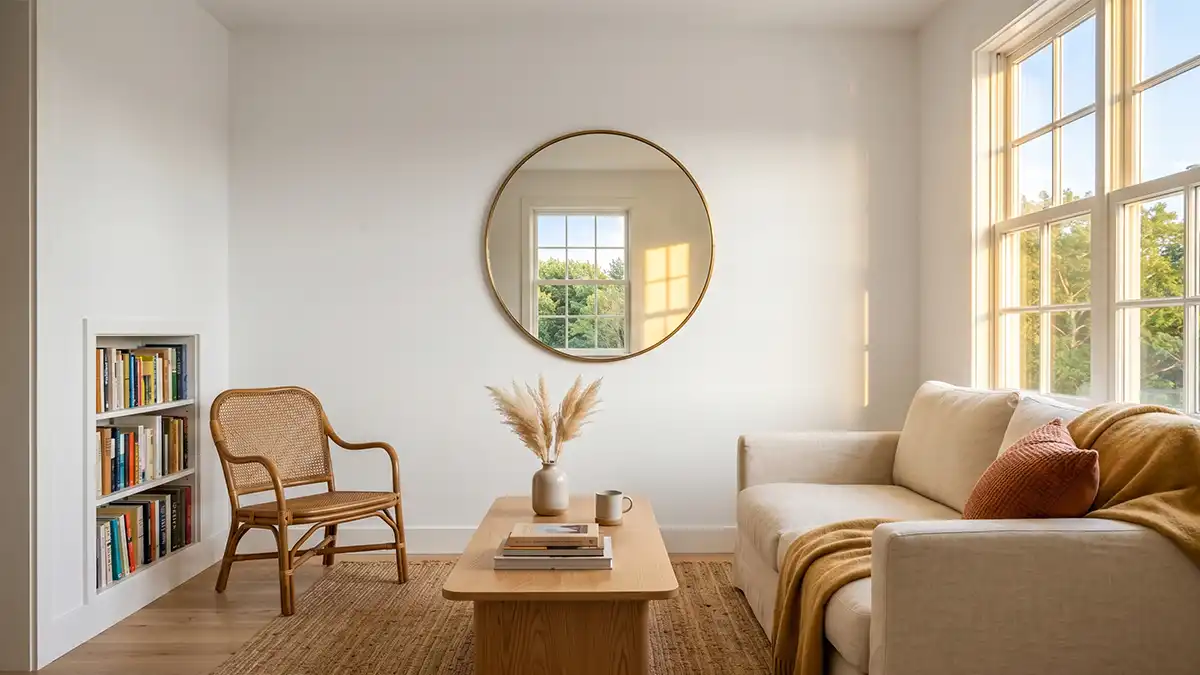
A large mirror hung directly across from your main window is the single most effective move for a small living room. It reflects light into the room and tricks the eye into seeing extra depth behind the wall.
Mirrors placed opposite a light source visually double the perceived depth of a small room by bouncing both light and space back at the viewer. (Interior design principle widely cited by NCIDQ-certified designers)
Beyond mirrors, three approaches consistently open up tight walls:
- Vertical format art: Tall, narrow pieces draw the eye up. A portrait-orientation canvas or a stacked set of prints makes an 8-foot ceiling feel closer to 10 feet.
- Light-toned art: Pale backgrounds bounce ambient light instead of absorbing it. A white-ground botanical print in a 12×16-inch frame adds personality without darkening the room.
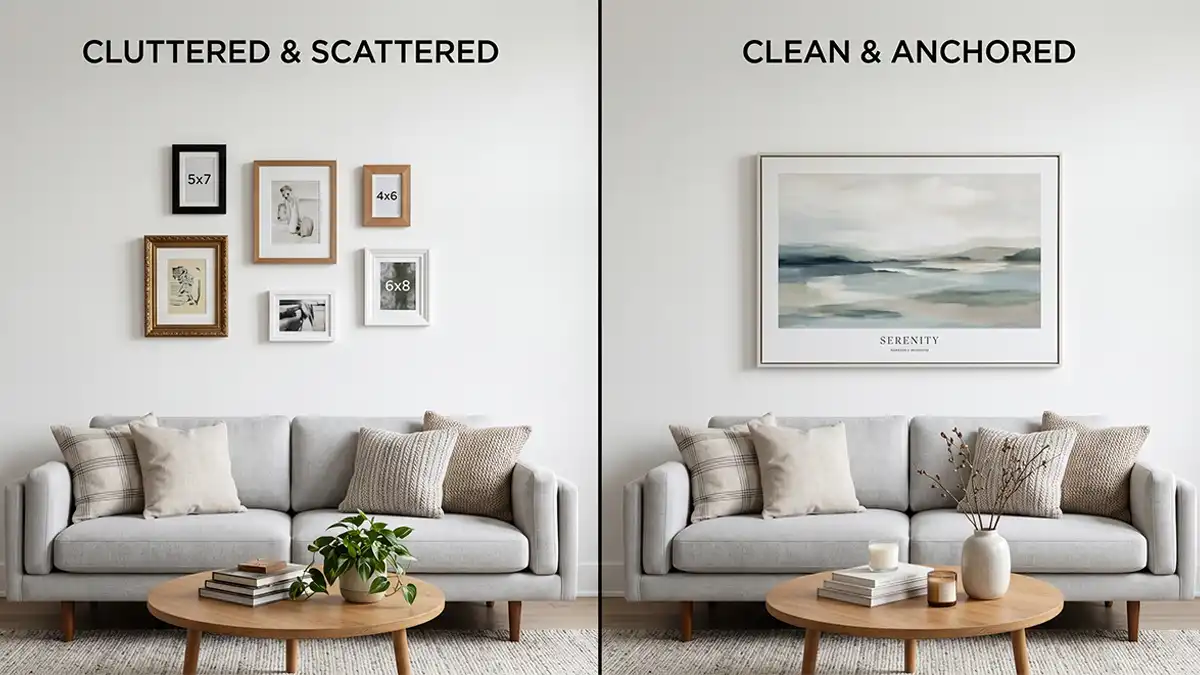
- One large statement piece: A single 24×36-inch canvas above a loveseat looks intentional and grounded. Five small mismatched frames across the same wall look chaotic — and chaos reads as crowded.
For a broader look at what works at every room scale, see wall decor ideas for any living room size.
What Size Wall Art Is Best for a Small Living Room?
Art that spans at least two-thirds of the furniture below it is the right size for a small living room. Anything smaller looks like a sticky note — even if it’s technically a decent-sized print.
A single piece of wall art should span at least two-thirds the width of the furniture it hangs above, according to proportion guidelines from the American Society of Interior Designers.
For a 60-inch loveseat, that means your art — or your grouped arrangement — should measure at least 40 inches wide. For a 48-inch console, aim for 32–40 inches wide.
Use this table to match art width to furniture width before you buy.
| Furniture Width | Minimum Art Width | Ideal Art Width | Maximum Art Width |
| 36 inches (armchair) | 22 inches | 24–28 inches | 30 inches |
| 48 inches (console) | 30 inches | 32–38 inches | 42 inches |
| 60 inches (loveseat) | 38 inches | 40–48 inches | 52 inches |
| 72 inches (sofa) | 46 inches | 48–58 inches | 64 inches |
Height matters too. A 24×36-inch vertical canvas above a 30-inch-tall console fills the wall without crowding the ceiling. Keep the top edge of your art at least 7 inches below the ceiling line in tight rooms.
The wall art sizing guide with charts and calculator covers every furniture and room size combination you’ll encounter.
How Do I Decorate a Small Living Room Wall Without Making It Feel Crowded?
Pick one wall as your focal point wall — the first wall your eye lands on when you enter the room. Put your main decor there. Keep every other wall clean: one small piece maximum, or nothing at all.
In rooms under 150 square feet, limiting active wall decoration to a single focal-point wall prevents visual fragmentation and keeps the space feeling open and deliberate. (Design principle from NCIDQ-certified interior design practice)
People often ask: “How do I decorate a small second living room without making it feel cluttered?” The answer is not less decor — it’s more focused decor. Three techniques that work every time:
- Let bare wall breathe: A single canvas centered on an open wall looks confident. Resist the urge to fill every gap — negative space is doing real work.
- Match frame finishes: Two different frame materials on one wall create noise. Stick to one finish — matte black, natural wood, or brushed gold — across every piece on that wall.
- Group, don’t scatter: Three small prints hung 2–3 inches apart read as one unit. Those same three prints spread across a wall read as three problems looking for a home.
Can I Hang a Gallery Wall in a Small Living Room?
Yes — but the rules shift when square footage is limited. A small-space gallery wall needs a tight boundary, a single cohesive frame palette, and no more than seven pieces.
Start by laying all your frames on the floor in the arrangement you want. Take a photo. Then trace the outer edge onto kraft paper, cut it out, and tape the template to your wall. You get the full visual before you put in a single nail.
Use this table to decide between a gallery wall and a single statement piece based on your wall width.
| Wall Width | Best Approach | Frame Count | Arrangement Style |
| Under 36 inches | Single piece | 1 | Centered, vertical format |
| 36–54 inches | Pair or trio | 2–3 | Horizontal row or tight triangle |
| 54–72 inches | Small gallery | 4–6 | Tight salon cluster, consistent frames |
| Over 72 inches | Gallery wall | 5–7 | Grid or organic cluster with clear border |
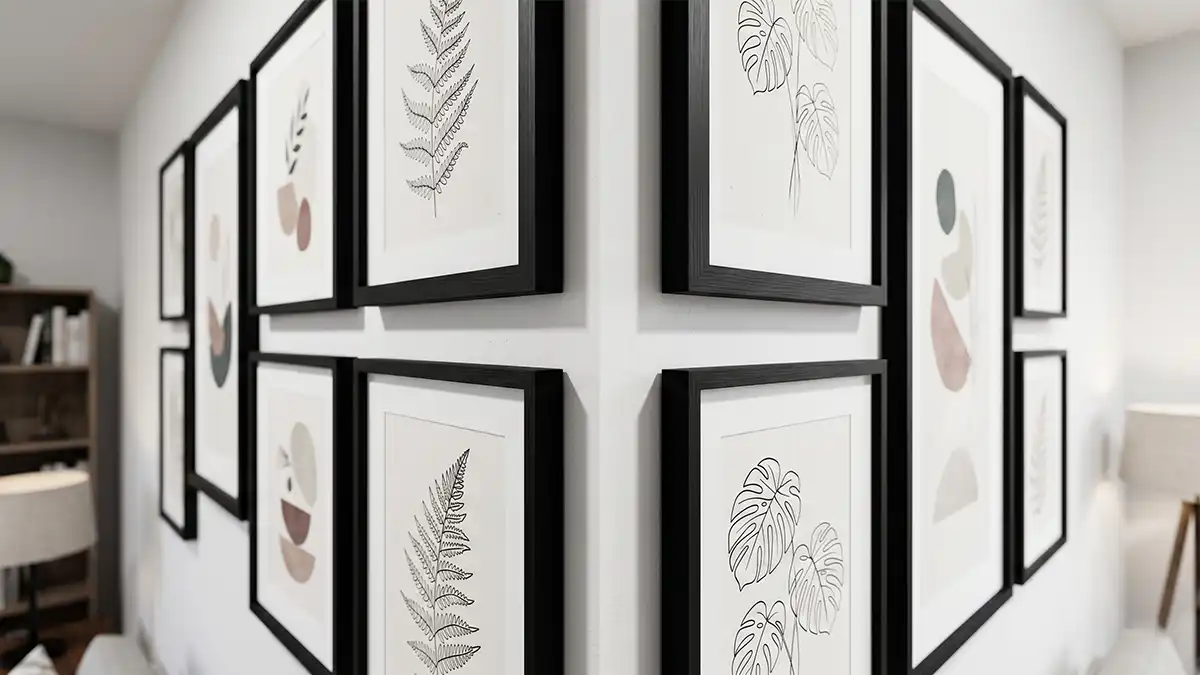
Limit your palette to two frame colors and two print styles. Black-framed botanical prints plus one black-framed typographic piece is cohesive. Add copper frames, a canvas, and a metal sign — and the same wall becomes a yard sale.
If your room is particularly narrow, small wall decoration ideas for narrow and tight spaces has room-specific approaches that apply directly to compact secondary living rooms.
How to Use Floating Shelves as Small Living Room Wall Decoration
Floating shelves solve two problems at once: decoration and storage, with zero floor space cost. That makes them one of the best tools in small second living room space wall decor ideas.
Mount a single 36-inch shelf at 60 inches from the floor — eye level. Style it with three to five objects of different heights. A small leaning print, one trailing plant in a ceramic pot, and two stacked books covers it in under five minutes and under $40.
Vertical arrangements on floating shelves draw the eye upward and make ceilings feel higher than they are — a well-documented effect in environmental psychology research (Journal of Environmental Psychology, 2019).
For renters who cannot drill: Command Large Picture Hanging Strips hold up to 16 lbs per strip pair — enough for lightweight shelves under 20 inches wide. No holes needed.
Style each shelf with the rule of three: One tall object, one medium, one low — offset slightly from each other. Repeat across two shelves and the wall reads as curated, not crammed.
The how to hang art without nails or damage guide covers hardware options for plaster, drywall, and concrete — all common in secondary living areas.
What Colors and Styles Work Best for Small Living Room Wall Decor?
Light-toned, warm-neutral artworks best in small living rooms. Soft whites, warm taupes, sage greens, and dusty blues all bounce light and make walls feel further away. Dark, heavily saturated pieces do the opposite — they absorb light and compete with your furniture, which makes the room feel smaller.
That said, one bold piece on a focal point wall can anchor a small room — if everything else stays quiet. A single deep-navy abstract canvas on the main wall, with white walls and light furniture around it, creates a controlled focal point rather than a trapped feeling.
For how color choices affect mood and perceived space, the color psychology in wall decor and its emotional effect guide covers each hue in detail.
Three art styles that perform best in compact spaces:
- Minimalist line art: Single-line or two-color pieces carry low visual weight. A 16×20-inch black line-art print adds personality without mass.
- Landscape photography: Horizontal landscape prints extend the perceived depth of the wall behind them. Ocean, desert, and forest scenes work especially well.
- Abstract with a limited palette: Two- or three-color abstracts in warm neutrals or cool blues add style without visual noise.
How High Should I Hang Art in a Small Living Room?
Hang art so its center sits at 57–60 inches from the floor. This is the standard eye-level rule used by interior designers across every room type.
Interior designers recommend hanging art with its center at 57–60 inches from the floor, matching average human standing eye level, according to guidance from the American Society of Interior Designers (ASID).
In a small room, this rule matters more than ever. Art hung too high disconnects from the furniture below it and makes the ceiling feel lower. Art hung too low compresses the room. The 57-inch rule keeps everything at the scale the room already works at.
When art hangs above a sofa or console, adjust slightly: Keep the art’s bottom edge 6–8 inches above the top of the furniture. This connects the art to the piece below and makes them read as one unit.
For rooms with low 7-foot ceilings: Drop to 54–56 inches at center. This stops art from fighting the ceiling line and keeps the room feeling proportional.
The how high to hang pictures and paintings guide has a formula for every ceiling height and furniture combination.
Common Wall Decor Mistakes in Small Living Rooms
Most small living room wall decoration problems come from five predictable errors. Each one has a real consequence — not just a style issue.
Mistake 1: Art too small for the wall A 10×12-inch print above a 60-inch sofa looks like a sticky note. The mismatch makes the art look accidental and the sofa look enormous. Fix it with the two-thirds rule: art width should be at least 67% of the furniture below it.
Mistake 2: Decorating every wall Four decorated walls in a small room give the eye nowhere to rest. Every surface competes for attention, which makes the space feel tense and tight. One focal point wall with clean walls around it always looks more intentional — and larger.
Mistake 3: Mixing frame styles without a unifying element Natural pine, matte black, gold, and white frames on the same wall look like a yard sale. Without a shared finish, even beautiful individual pieces look accidental together. Pick one primary frame finish and use it on 80% of your wall decor.
Mistake 4: Ignoring vertical space Most small rooms have 8 feet of ceiling, but people decorate only the bottom 4 feet. The space above 60 inches is usable. A tall narrow canvas, a vertical trio of prints, or a shelf at 66 inches all activate this dead zone and add perceived height.
Mistake 5: Dark art on a dark wall Dark art against a dark wall disappears — which wastes the investment. Dark art against a light wall in a small room compresses the space. In compact rooms, keep either the art or the wall light, never both dark.
For installation errors beyond style, common wall decor hanging mistakes and fixes covers wrong hardware, uneven spacing, and anchor failures.
Tiny Living Room Wall Decorating: What to Expect Long-Term
Decorating a small second living room is not a one-time project. It’s a system you tweak as the room evolves. Here is what the reality looks like over time.
The first 30 days reveal whether your choices hold up at different times of day. Art that looks calm in afternoon light can feel cold under warm evening bulbs. If that happens, swap to a warmer-toned print or add a plug-in picture light above the main piece. A good picture light runs $35–$60 and changes how art reads without any rewiring.
At 6 months, you’ll see whether floating shelves stay styled or drift into storage overflow. The most common shelf failure in small rooms is object creep — a candle becomes four candles and the curated look collapses. Set a hard limit of five to seven objects per shelf and edit every season.
Hardware durability matters more than most people expect. Command strips rated for 16 lbs hold well in stable temperature environments. But they fail in rooms with temperature swings above 20°F — like sunrooms or back additions. In those spaces, use wall anchors rated to 50 lbs even for lightweight frames.
Art longevity: Direct UV exposure fades canvas prints and paper prints within 18–24 months. If your small living room has a south-facing window with no UV film, move art away from direct sun — or choose metal prints. Metal resists UV fading far better than canvas or paper.
Canvas art typically lasts 5–10 years indoors before ink visibly fades. Metal prints last 20 or more years under the same conditions. In a small room where you look at the same piece every day, the material you choose matters more than it would in a hallway.
The different types of wall art decor explained guide covers canvas, metal, acrylic, and paper with durability notes for each.
Frequently Asked Questions
What wall decor makes a small living room look bigger?
Mirrors opposite windows, vertical-format art, and light-toned prints all visually expand small rooms. Stick to one focal point wall and leave surrounding walls clean
What size wall art is best for a small living room?
Art should span at least two-thirds of the furniture below it. For a 60-inch loveseat, that means a piece or grouping at least 40 inches wide.
Can I do a gallery wall in a small living room?
Yes — limit it to one wall, keep the total piece count to seven or fewer, and use one unified frame finish. A kraft-paper template on the wall before hanging prevents major mistakes.
How do I decorate a small second living room without it feeling cluttered?
Choose one focal point wall for your main decor and leave the rest bare or nearly bare. Group pieces tightly rather than scattering them, and match frame finishes across every piece on the wall.
How high should I hang art in a small living room?
Center art at 57–60 inches from the floor — the standard eye-level rule. Above furniture, keep the art’s bottom edge 6–8 inches above the furniture’s top surface.
How do I use floating shelves as wall decor in a small living room?
Mount one 36-inch shelf at 60 inches from the floor and style it with three to five objects using the rule of three: One tall, one medium, one low. Edit ruthlessly every season.
Key Takeaways
- Art center-height should sit at 57–60 inches from the floor — the interior design standard for every room size.
- Pieces above furniture should span at least two-thirds of the furniture’s width to avoid the postage-stamp effect.
- One focal point wall keeps rooms under 150 sq ft feeling open — four decorated walls create visual chaos.
- Mirrors opposite light sources are the fastest way to add perceived depth to a small living room.
- Vertical-format art draws the eye upward, making 8-foot ceilings feel closer to 10 feet.
- Gallery walls work in small rooms if you cap pieces at seven and unify all frame finishes.
- Command Large Picture Hanging Strips hold up to 16 lbs per pair — enough for most lightweight wall decor without drilling.
- Metal prints outlast canvas by 10–15 years under direct light — worth the extra cost in a daily-use room.
Pick your focal point wall, size your art to two-thirds of the furniture below it, and hang at 57 inches — those three decisions will change how your room feels before you spend a dollar on new art. When you’re ready to go further, the full range of wall decor ideas for any living room size has styles and formats to match any aesthetic.
Sources
- University of Florida IFAS Extension. Principles of Interior Design. Principles of Interior Design
- Chang, A., & Chen, J. Environmental Psychology and Perceived Space in Interior Environments. Journal of Environmental Psychology, 2019. Print
Want more wall art ideas, room styling tips and first access to new Bruzzen collections? Join the list — free.
Subscribe Free →