

Materials, Blog, Wall Art Tips & Advice
Canvas vs Paper Prints: Which Is Right for Your Wall?
Canvas prints are best for large, textured, ready-to-hang wall art with a soft, artistic look. Paper prints are best for sharp detail, photography, gallery walls and custom framing. Choose canvas for durability, low glare and easy hanging. Choose paper for crisp images, frame flexibility and a classic polished finish.
If you are choosing wall art for a specific room and you are not sure whether canvas or paper makes more sense, the answer usually comes down to one question: does the room get direct light?
Canvas handles glare better. Paper rewards a darker wall or a well-lit frame. Everything else — texture, framing, cost, durability — follows from there.
This guide covers every variable with real measurements, specific material details and a room-by-room decision table so you leave with a clear answer rather than a longer shortlist.
Contents
Canvas vs Paper Prints: Main Differences
| Feature | Canvas Prints | Paper Prints |
| Base material | Cotton-polyester blend canvas fabric | Fine art paper, photo paper or poster paper |
| Texture | Visible woven texture | Smooth or lightly textured surface |
| Display style | Stretched over wooden bars or framed | Usually framed behind glass or acrylic |
| Finish | Mostly matte and low-glare | Matte, satin, semi-gloss or glossy |
| Best for | Large wall art, painterly artwork, modern spaces | Photography, detailed artwork, gallery walls |
| Hanging | Often ready to hang | Needs a frame before hanging |
| Glare under light | Low — matte surface scatters light | Higher — especially with glossy or satin finish |
Simple rule: choose canvas for texture and presence. Choose paper for sharp detail and framing control.
What Is a Canvas Print?
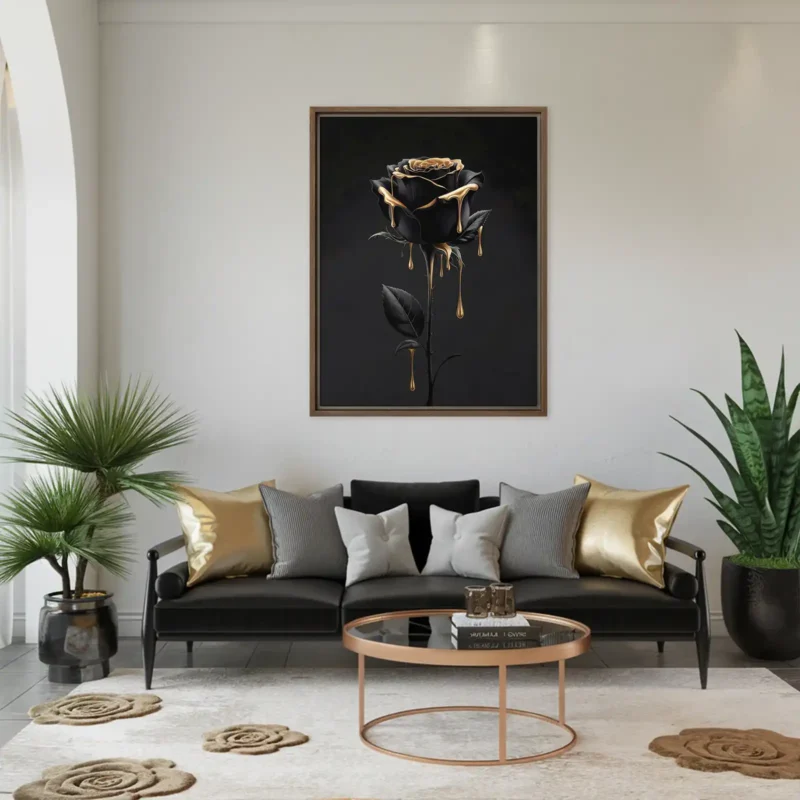
A canvas print is artwork printed on canvas fabric — typically a cotton-polyester blend that holds ink density well at large formats. The canvas is stretched over a wooden frame called stretcher bars. A gallery-wrapped canvas has the image running around the edges so no frame is required. Some canvas prints come with an outer frame as well.

Canvas prints have a soft, textured surface. They do not need glass, which makes them lighter and less reflective than most framed paper prints.
Canvas prints work well for:
- Large wall art — particularly above 20×24 inches
- Living room statement pieces
- Bedrooms, hallways and salons
- Modern home decor
- Abstract prints and painterly artwork
- Family portraits at medium to large sizes
- Nature and landscape art
- Any room where glass glare is a problem
Canvas gives art a warm, gallery-style feel. It reads as less formal than framed paper — which is often exactly the point.
What Is a Paper Print?
A paper print is artwork printed on photo paper, fine art paper, poster paper or archival paper. It usually needs a frame, mat, glass or acrylic protector before display.
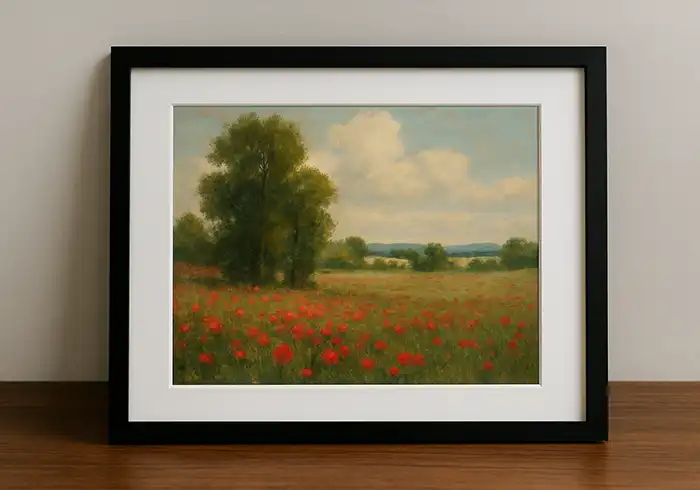
Paper prints have a smoother surface than canvas. That makes them better for artwork with fine detail, clean lines, rich contrast, or sharp photography.
At sizes below 16×20 inches, the difference between canvas and paper is most visible. Fine lines, small text and photographic detail all render more crisply on paper at smaller sizes.
Paper prints work well for:
- Photography — particularly below 20×24 inches
- Gallery walls where you want consistent frames across pieces
- Minimalist prints, line art and typography
- Botanical illustrations and architectural drawings
- Formal rooms where a framed, polished look is the goal
- Rotating seasonal art — paper is easier to swap
Appearance: Which Looks Better?
Neither looks better in every situation. It depends on what the room needs.
| Style goal | Best choice | Why |
| Soft, artistic texture | Canvas | Fabric texture gives artwork a painted feel |
| Sharp photo detail | Paper | Smooth paper keeps fine details crisp |
| Modern frameless look | Canvas | Gallery-wrapped canvas is clean without glass |
| Classic framed look | Paper | Paper works well with mats and frames |
| Low-glare wall art | Canvas | Matte canvas reduces reflection under direct light |
| Glossy colour pop | Paper | Gloss or satin paper boosts contrast and colour |
Choose canvas if you want the piece to feel bold, warm and relaxed. Choose paper if you want crisp detail, clean framing and a more polished gallery result.

Detail and Colour Quality
Paper wins on fine detail. At sizes above 30×40 inches, the woven texture of canvas becomes part of the visual experience, which works for painterly or abstract subjects but softens photographic detail noticeably.
Below 20×24 inches, fine lines, small text, botanical drawings and portrait photography all render more precisely on paper. Above 24×30 inches, canvas holds its own on most subjects.
| Artwork type | Better option |
| Portrait photography | Paper below 20×24, either above 24×30 |
| Landscape photography | Paper for detail, canvas for mood |
| Abstract artwork | Canvas |
| Typography and quote prints | Paper |
| Botanical illustrations | Paper |
| Painterly artwork | Canvas |
| Large statement art | Canvas |
| Black and white photography | Paper |
For bold images at large sizes, canvas shines. For crisp images at any size, paper wins.
Durability: Which Lasts Longer?
Canvas prints handle daily use better because they do not need glass. They are less fragile, lighter to hang and safer in high-traffic spaces.
A cotton-polyester canvas at standard archival ink quality resists fading for 75 to 100 years under normal indoor conditions. Paper prints can match this with the right paper and UV-protective glass — but they need more protection to get there.
| Durability factor | Canvas prints | Paper prints |
| Glass needed | No | Usually yes |
| Break risk | Low | Higher if framed with glass |
| Moisture resistance | Better | Lower unless well protected |
| Cleaning | Dust with soft dry cloth | Clean frame and glass carefully |
| High-traffic areas | Good choice | Riskier if glass is used |
| Long-term care | Low maintenance | Needs more care |
| Fade resistance | 75–100 years at archival quality | Matches canvas with UV glass |
For hallways, kids’ rooms, rentals, studios and busy homes, canvas prints are the easier practical choice. For dry, calm rooms where detail and framing matter, paper works beautifully.
Cost: Which Is Cheaper?
Paper prints usually cost less at smaller sizes. But the frame changes the final comparison.
A paper print at 16×20 inches may cost $25. Add a quality frame, mat, glass and hanging hardware and the total reaches $80 to $120. A canvas print at the same size arrives ready to hang for $45 to $65.
At large sizes — 24×36 and above — canvas is almost always the better value. A framed paper print at 24×36 with a quality frame and UV glass can cost $150 to $250. A canvas print at the same size typically costs $80 to $130 and arrives ready to hang.
| Cost factor | Canvas prints | Paper prints |
| Small sizes (under 16×20) | Often higher | Usually cheaper |
| Large sizes (24×36 and above) | Good value ready-to-hang | Can be expensive with quality framing |
| Framing cost | Optional or included | Usually required |
| Total setup cost | More predictable | Depends on frame choice |
| Best budget use | Large ready-to-hang art | Small prints and gallery walls |
If you want large wall art without extra framing costs, canvas is almost always the better value. If you want small framed art or a rotating gallery wall, paper is the smarter pick.
Framing: Canvas vs Paper
Canvas prints can be displayed frameless (gallery-wrapped), with a floating frame or with a traditional frame. Most buyers hang them frameless. This makes them faster to display and easier to move.
Paper prints need a frame to look finished. The frame gives you more control over the final look — the same print in a black frame reads differently from gold or natural wood — but it also adds cost and decisions.
| Display preference | Best option |
| Ready to hang with no extra steps | Canvas |
| No glass — less weight and glare | Canvas |
| Custom mat and frame | Paper |
| Gallery wall with consistent frames | Paper |
| Floating frame look | Canvas |
| Traditional polished framed art | Paper |
Best Choice by Room
Different rooms have different requirements. Use this table as a starting point — then adjust based on the specific light conditions and foot traffic in your space.
| Room | Better option | Why |
| Living room | Canvas | Large statement pieces, low glare |
| Bedroom | Canvas or paper | Canvas feels warm, paper feels polished |
| Bathroom | Canvas | Handles humidity better than exposed paper |
| Kitchen | Canvas | No glass glare, easier to clean around |
| Hallway | Canvas | Safer in narrow, high-traffic spaces — no glass |
| Home office | Paper | Sharp detail and framed art read as professional |
| Gallery wall | Paper | Easier to frame, group and swap |
| Kids’ room | Canvas | No glass and less fragile |
| Salon or studio | Canvas | Bold, photo-friendly and easy to hang |
| Formal dining room | Paper | Framed prints look refined and classic |
How to Choose Between Canvas and Paper
- Identify the room’s light conditions. Direct sunlight or overhead spotlights pointing at the wall — choose canvas. Diffuse or controlled light — either works.
- Decide on size. Below 16×20 and you want fine detail — paper. Above 24×30 and you want presence — canvas.
- Decide on framing commitment. If you want to hang art today without buying a frame — canvas. If you want to choose the frame as part of the design — paper.
- Consider the room’s formality. Casual, modern or eclectic spaces — canvas. Formal, traditional or office environments — paper.
- Consider the art subject. Photography with fine detail — paper. Abstract, painterly or large-format bold art — canvas.
| Your goal | Best choice |
| Maximum detail | Paper |
| Large statement art | Canvas |
| No-glare display | Canvas |
| Custom framing control | Paper |
| Low-maintenance wall art | Canvas |
| Photo-quality sharpness | Paper |
| Modern home decor | Canvas |
| Classic framed look | Paper |
| High-traffic spaces | Canvas |
| Gallery wall sets | Paper |
Maintenance: Which Is Easier to Care For?
Canvas prints are easier to maintain. Dust with a soft, dry microfibre cloth. Avoid water and chemical cleaning products on the canvas surface directly.
Paper prints require more care because the surface is protected by glass or acrylic. Clean the glass with a non-abrasive cloth. Avoid moisture on the paper surface itself.
| Care task | Canvas prints | Paper prints |
| Dusting | Soft dry microfibre cloth | Dust the frame and glass |
| Cleaning | Avoid water and chemicals | Clean glass with non-abrasive cloth |
| Moisture | More forgiving | Keep away from damp spaces |
| Sunlight | Avoid long direct exposure | UV-protective glass helps significantly |
| Longevity | Low maintenance | Needs more protection to last |
Both options last longer away from strong sunlight, moisture and rough handling.
Pros and Cons
Canvas prints:
| Pros | Cons |
| Ready to hang — no frame needed | Costs more than small paper prints |
| Textured, artistic look | Not ideal for very fine detail |
| No glass glare | Fewer framing style options |
| Good value at large sizes | Fabric texture softens sharp images |
| Lightweight and durable | Not the right choice for glossy photo looks |
Paper prints:
| Pros | Cons |
| Sharp fine detail | Usually needs a frame to look finished |
| Best format for photography | Glass creates glare in bright rooms |
| Many finish options — matte, satin, gloss | More fragile than canvas |
| Ideal for gallery walls | Quality framing raises the total cost |
| Easy to store and swap | Not suitable for humid rooms |
What We Have Learned from Six Years of Selling Both
Canvas outsells paper prints at Bruzzen by roughly four to one at sizes above 24×30 inches. At smaller sizes the gap narrows significantly. Below 16×20 inches, customers who want a specific framing option almost always choose paper.
The most consistent pattern we see: customers who order canvas for a living room feature wall never ask about paper alternatives. Customers who order paper prints for a gallery wall often end up mixing in one canvas piece because they want one element with visual weight. That combination — paper for the smaller framed pieces, one canvas as the anchor — is the gallery wall approach we recommend most consistently.
The second most consistent pattern: customers go too small on canvas. A 16×20 canvas in a living room almost always prompts a follow-up asking whether they should have gone to 24×30. At sizes below 20×24, the texture advantage of canvas becomes less visible and the detail advantage of paper becomes more relevant. If you are choosing between canvas sizes, go one size up from what feels right. It works better almost every time.
— Tricia Clarke, Founder, Bruzzen Wall Art
Bruzzen Collections
Canvas Wall Art — Framed and Wrapped → Gallery-wrapped and framed canvas prints in a full range of subjects and sizes. Ready to hang from 12×16 to 36×48 inches.
Poster Art Prints → Photography, fine art, typography and botanical prints on quality paper stock. Frame in any standard size.
Printable Wall Art → Download, print at any local print shop and frame yourself. The most flexible format at any size.
Frequently Asked Questions
Are canvas prints better than paper prints?
Canvas prints are better for large wall art, textured looks, low-glare rooms and ready-to-hang decor. Paper prints are better for sharp photo detail, gallery walls, custom framing and crisp fine detail. The best choice depends on the room, size and subject.
Do canvas prints last longer than paper prints?
Archival-quality canvas prints can resist fading for 75 to 100 years under normal indoor conditions. Paper prints can also last for decades with UV-protective glass and quality framing. Without extra protection, canvas usually lasts longer.
Are paper prints cheaper than canvas prints?
Paper prints usually cost less below 16×20 inches. At larger sizes, canvas is often better value because it arrives ready to hang. Framing a large paper print with matting and UV glass can add $80 to $150 or more.
Which looks more expensive — canvas or paper prints?
Both can look premium. Canvas feels warm, bold and artistic. Framed paper looks polished and formal. A framed paper print often suits traditional rooms, while a large gallery-wrapped canvas can feel more premium in modern spaces.
Are canvas prints good for photos?
Yes, especially above 20×24 inches. Smaller photo prints often look crisper on paper. At 24×30 inches and larger, canvas adds warmth and texture, while paper keeps sharper fine detail.
Should I choose canvas or paper for large wall art?
Canvas is usually better for large wall art above 24×30 inches. It arrives ready to hang, needs no glass and handles large scale well. Large paper prints can look beautiful but need professional framing for support and protection.
Are paper prints good for gallery walls?
Yes. Paper prints are ideal for gallery walls because they are easy to frame, arrange and swap. Matching frames help the whole wall feel planned. You can also use one canvas piece as the anchor for extra visual weight.
Can canvas prints be framed?
Yes. Gallery-wrapped canvas can hang without a frame, but it can also be placed in a floating frame or traditional outer frame. Floating frames work especially well in modern and contemporary rooms.
Which is better for a bathroom — canvas or paper?
Canvas is usually better for bathrooms because it handles humidity better than exposed paper. Paper can warp or bubble in damp rooms. Keep all wall art away from direct water and heavy steam.
Which is better for office wall art?
Paper prints work well for home offices and formal spaces where sharp detail and framing matter. Canvas works better for salons, creative studios and relaxed workspaces where a bold, warm look is preferred.
→ See the complete office wall art guide
Further Wall Art Media Comparison Info
- Acrylic vs Metal Prints: A Comprehensive Comparison Guide
- Metal vs. Canvas Prints: Picking the Best Wall Art Material for Your Budget & Style
- Acrylic vs. Canvas Prints: Which Offers the Best Value and Aesthetics?
- Acrylic vs. Traditional Paper Prints ( Giclee &Standout): A Full Comparison
Want more wall art ideas, room styling tips and first access to new Bruzzen collections? Join the list — free.
Subscribe Free →