

Above a bed, choose a tapestry at least as wide as the mattress and up to about 12 inches wider. Above a couch or console, choose one 60 to 75% as wide as the furniture. On an open wall, use the same 60 to 75% rule against the wall width. The charts below turn those rules into real numbers for every bed size, and you can browse finished pieces in our wall tapestries collection.
Tapestry Size Chart by Bed
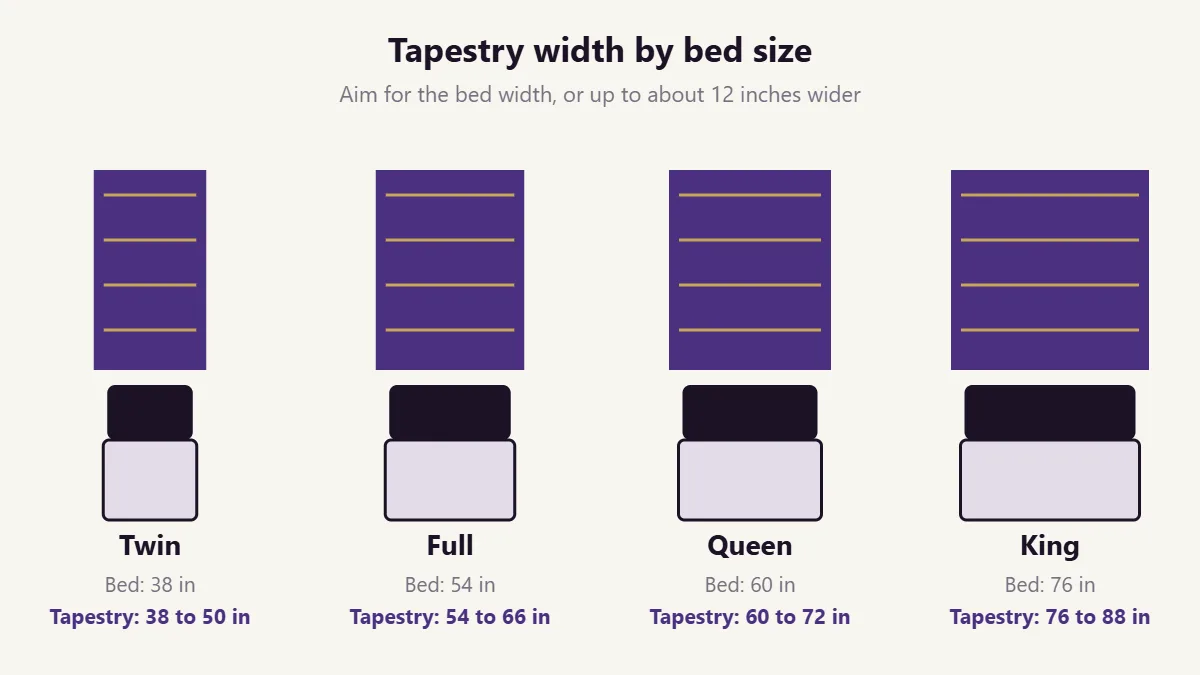
| Bed | Mattress width | Tapestry width | Fits well |
|---|---|---|---|
| Twin | 38 in | 38 to 50 in | Kids rooms, dorms, guest rooms |
| Full | 54 in | 54 to 66 in | Small bedrooms |
| Queen | 60 in | 60 to 72 in | Most main bedrooms |
| California king | 72 in | 72 to 84 in | Long, narrow bedrooms |
| King | 76 in | 76 to 88 in | Large bedrooms, wide walls |
Going narrower than the bed is the most common mistake. As Homenish puts it, a tapestry much smaller than the bed looks out of proportion with the bed and the room. Wider is safer. A tapestry that runs a few inches past each side of the bed reads as a headboard.
Tapestries come in a wide spread of sizes. Hunker lists sizes from about 2 by 3 feet up to 7 by 8 feet, with 50 by 60 inches a popular pick over a bed. Hung landscape, a 60 by 50 inch tapestry suits a full or queen bed.
How High to Hang a Tapestry Above a Bed
Tuck the bottom edge 1 to 4 inches behind the top of the headboard or mattress, a range Home Decor Tapestries recommends for any furniture. The overlap hides the hem and ties the fabric to the bed, so it looks planned instead of floating.
With no headboard, start the bottom edge just above the mattress top. Then check the top edge. If it ends within a few inches of the ceiling, choose a shorter tapestry or turn a tall one sideways.
Tapestry Size for a Couch
Above a couch, treat the tapestry like any piece of wall art. Multiply the couch width by 0.6 and 0.75 to get your range, then hang the bottom edge 6 to 12 inches above the back cushions. Our wall art sizing guide has a calculator that does the math for you.
| Furniture | Width | Tapestry width |
|---|---|---|
| Loveseat | 60 in | 36 to 45 in |
| Standard sofa | 84 in | 50 to 63 in |
| Long sofa | 96 in | 58 to 72 in |
| Console or sideboard | 48 in | 29 to 36 in |
Tapestry Size for an Open Wall
On a wall with no furniture, measure the wall width and use 60 to 75% of it. A 10-foot (120-inch) wall takes a tapestry 72 to 90 inches wide. A narrow 4-foot wall beside a door takes one about 30 to 36 inches wide, hung portrait.
For smaller tapestries on an open wall, put the center 57 to 60 inches from the floor, the same eye-level rule we use in our picture hanging height guide. Large tapestries that fill most of the wall can sit higher so the bottom edge clears furniture you might add later.
Portrait or Landscape?
- Landscape (wider than tall) fits above beds, couches and long consoles. It follows the line of the furniture.
- Portrait (taller than wide) fits narrow walls, spaces beside doors and stair landings. It draws the eye up and makes a low ceiling feel taller.
Tape It Out Before You Buy
Fabric looks smaller on a wall than it does folded in a product photo, a point DG Floors makes in its tapestry sizing guide. Mark the tapestry size on the wall with painter’s tape before you order. Live with the rectangle for a day and look at it from the doorway and from the bed or couch.
What Changes the Finished Size
- Hems and rod pockets. A rod pocket folds fabric over at the top, so the visible height can be an inch or two less than the listed size.
- Rods and dowels. A rod with end caps adds a few inches of width. Leave room for it if the wall is tight.
- Listed size. Check whether a listing gives the finished size or the fabric size before hemming.
Once you have your size, our guide on how to hang a tapestry covers no-nail methods for rentals and walls you’d rather not drill.
Want more wall art ideas, room styling tips and first access to new Bruzzen collections? Join the list — free.
Subscribe Free →